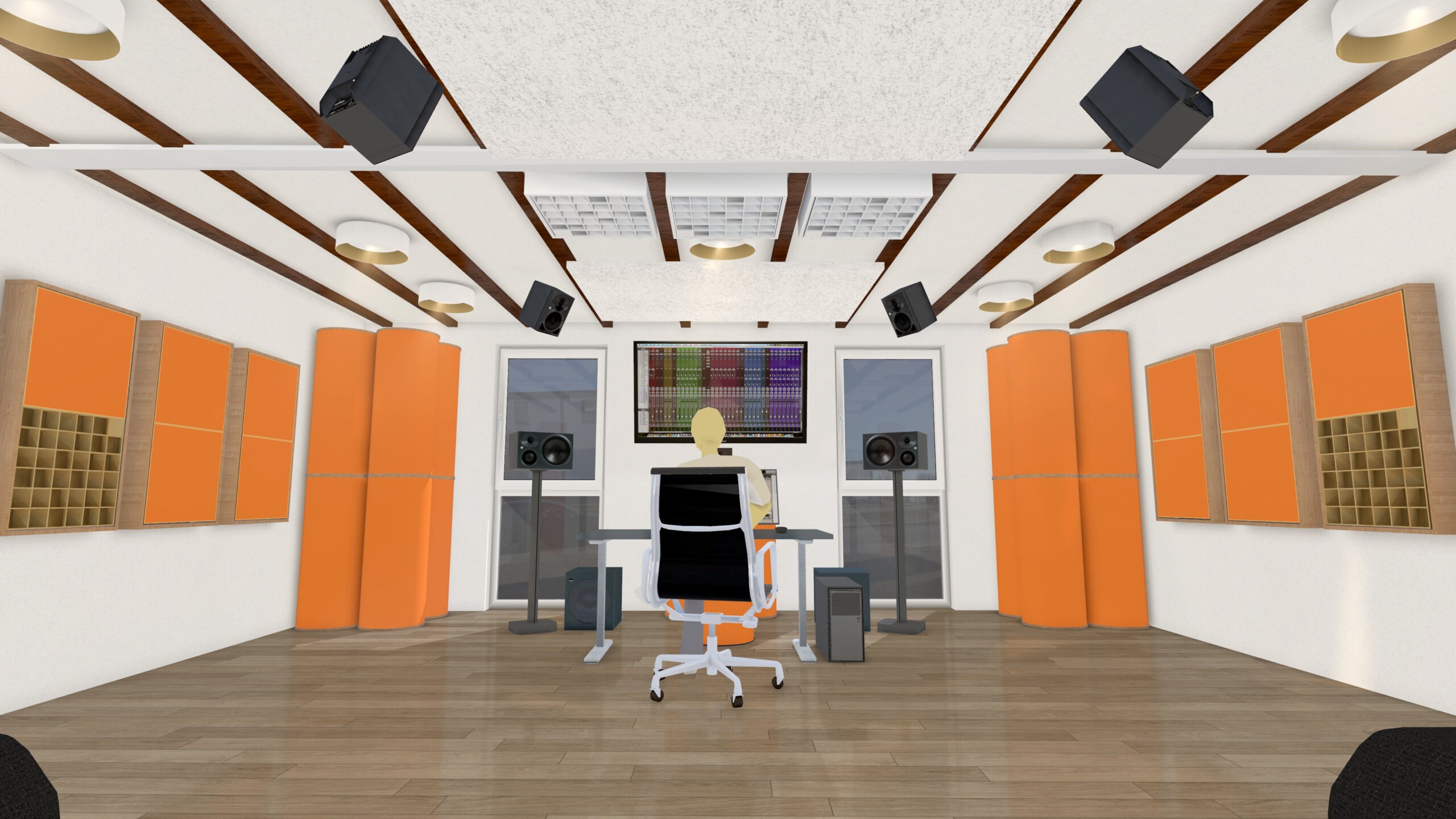
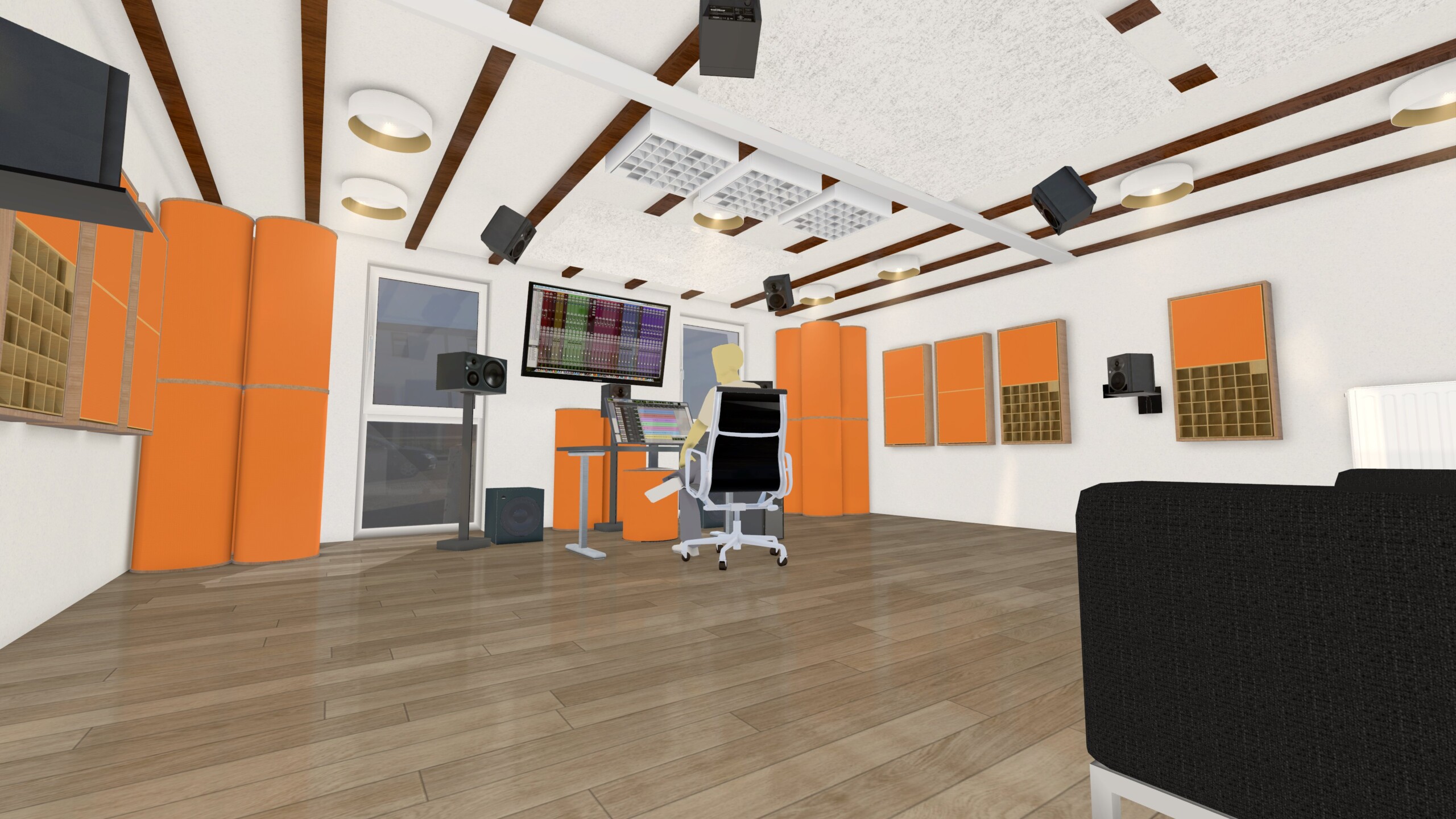
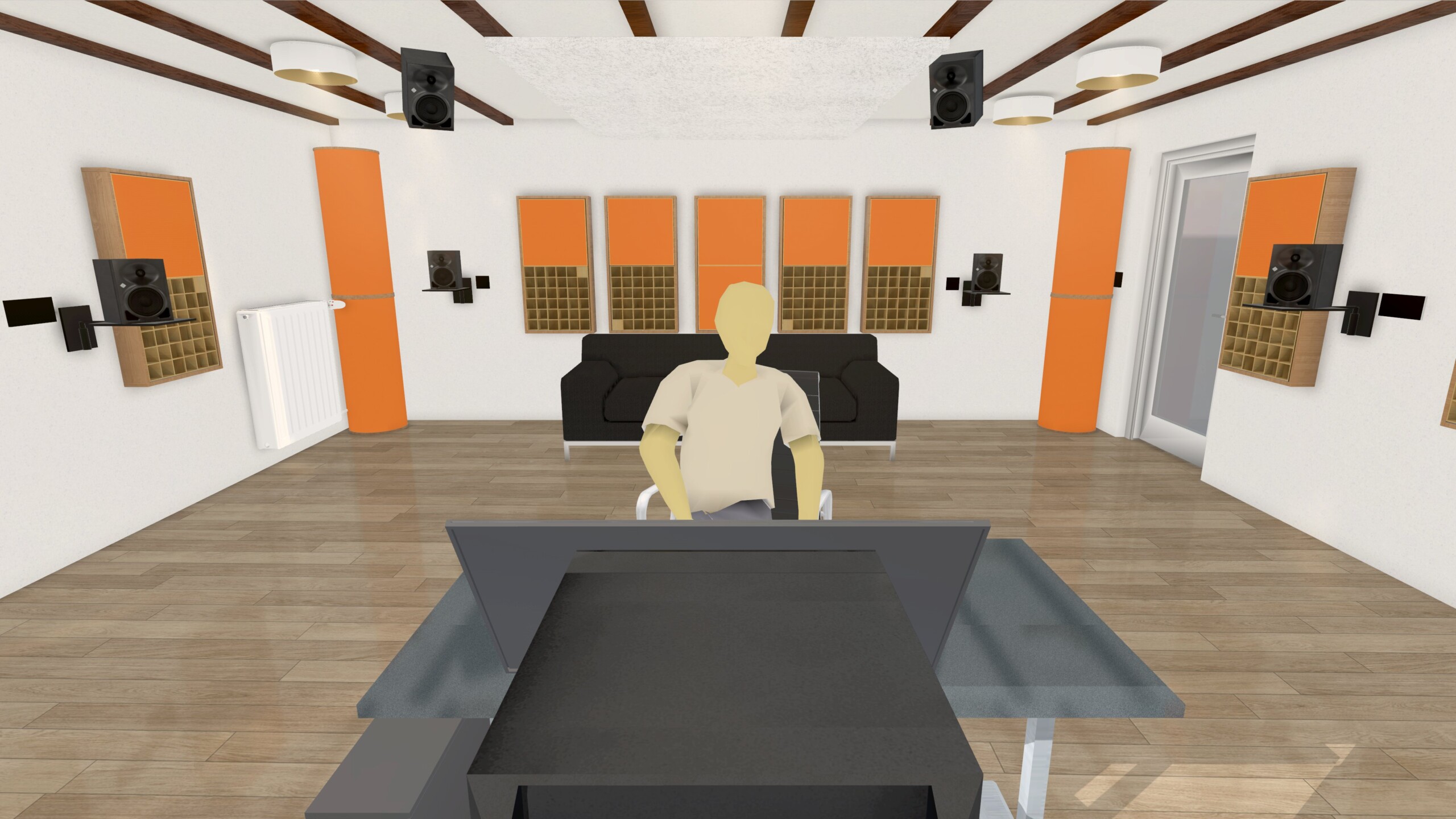
3D or immersive audio is becoming an integral part of modern audio and media production. Today, in addition to stereo, an immersive sound experience is expected in many fields. Formats such as Dolby Atmos provide exactly that: sound is no longer perceived merely in the horizontal but is placed in three dimensions within a surrounding space. This – and the fact that we needed to renovate the roof – are two of the reasons why we decided to build an Atmos control room.
At the same time, we are currently developing our new ‘3D Audio’ topic course. The new control room is designed to help our tutors create sound samples and will be available not only for studio use but also for training purposes at HOFA-College.
In this blog post, we’ll take you on a journey to the new Atmos control room and give you an insight into the planning, development, construction work and equipment.
The new 3D Audio course is currently included free of charge in our ultimate online course bundle, AUDIO DIPLOMA.
In this blog, you’ll find regular updates on the development of the new control room:
[May 2026] Control room completed
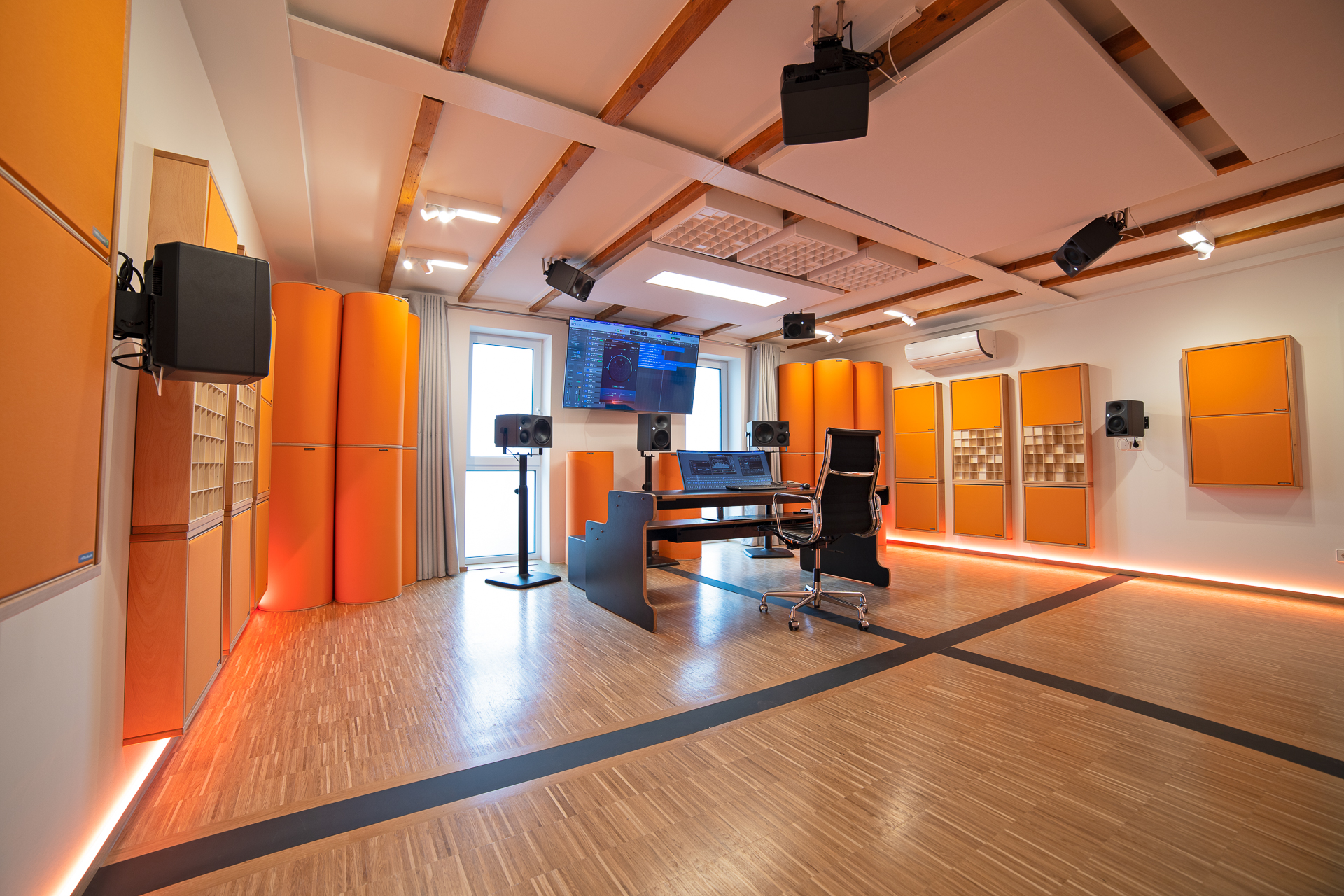
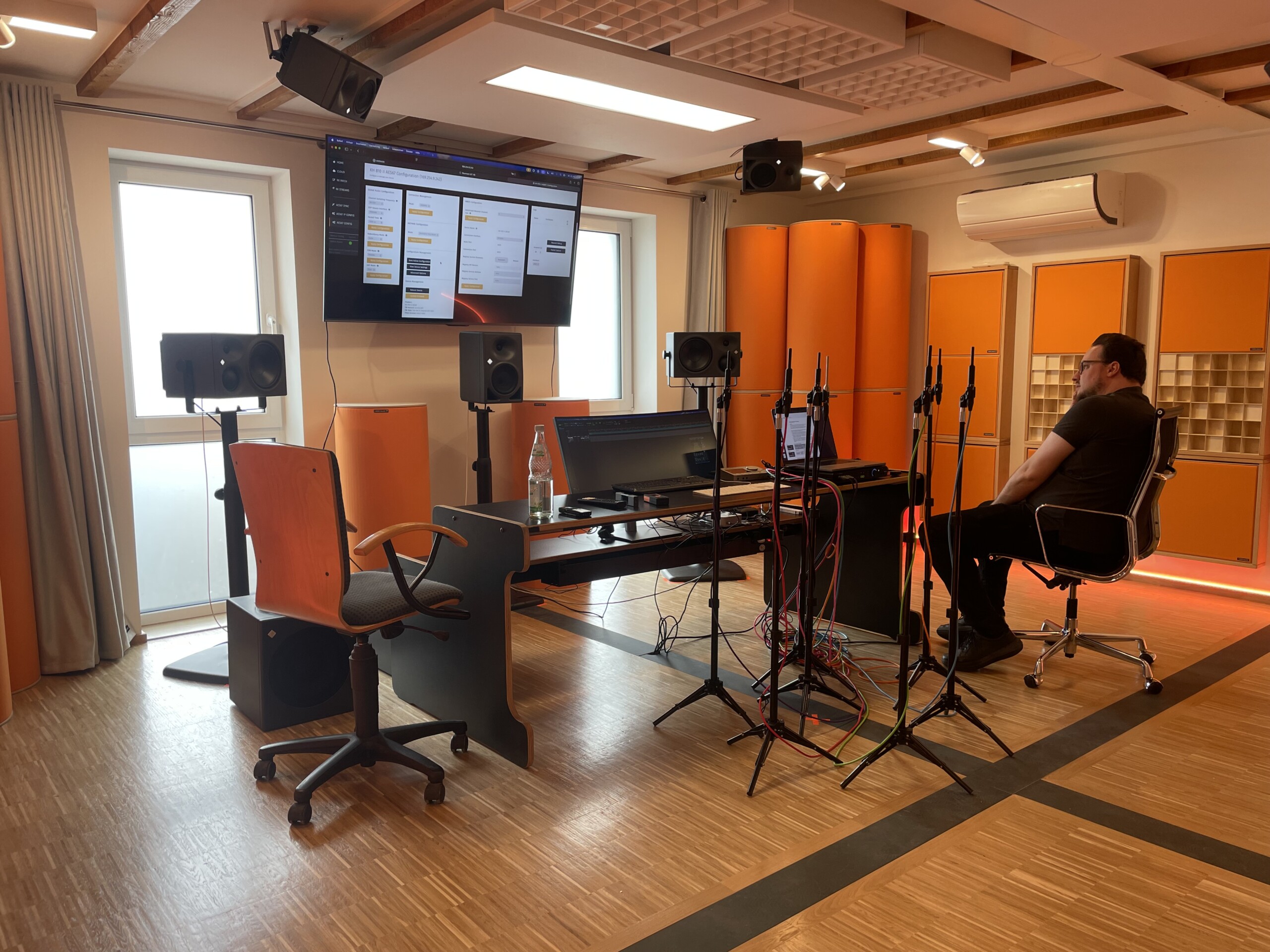
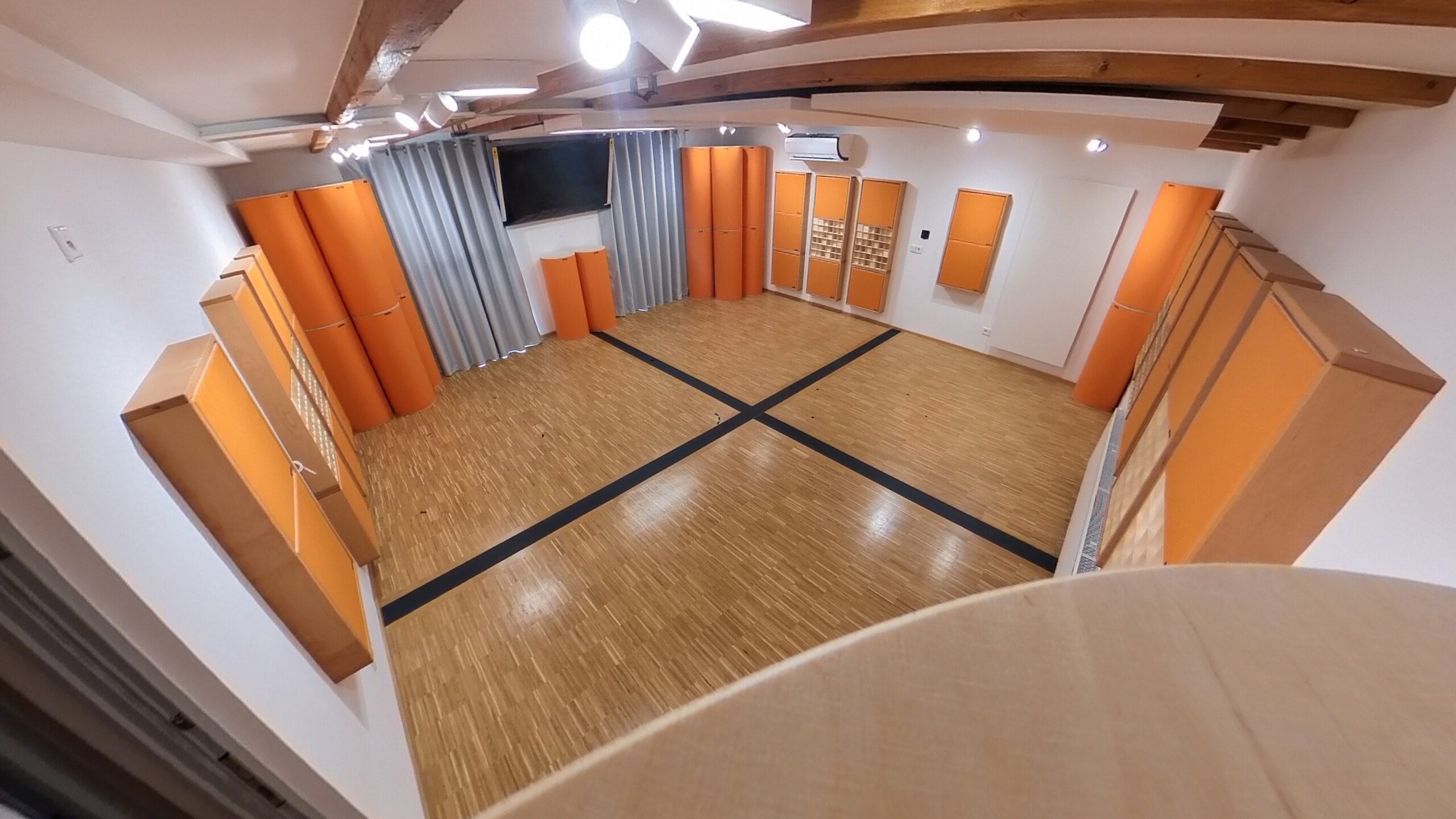
The wait is over – control room D Atmos is finally ready. Following intensive planning and several weeks of construction, the building site has been transformed into exactly the space we had envisaged from the outset.
In the coming days, we will begin producing the first content and video tutorials here for our new HOFA-College topic course, ‘3D Audio’. The online course takes an in-depth and comprehensive exploration of immersive audio, mixing and mastering in Atmos formats.
[May 2026] Calibrating the control room to Dolby specifications
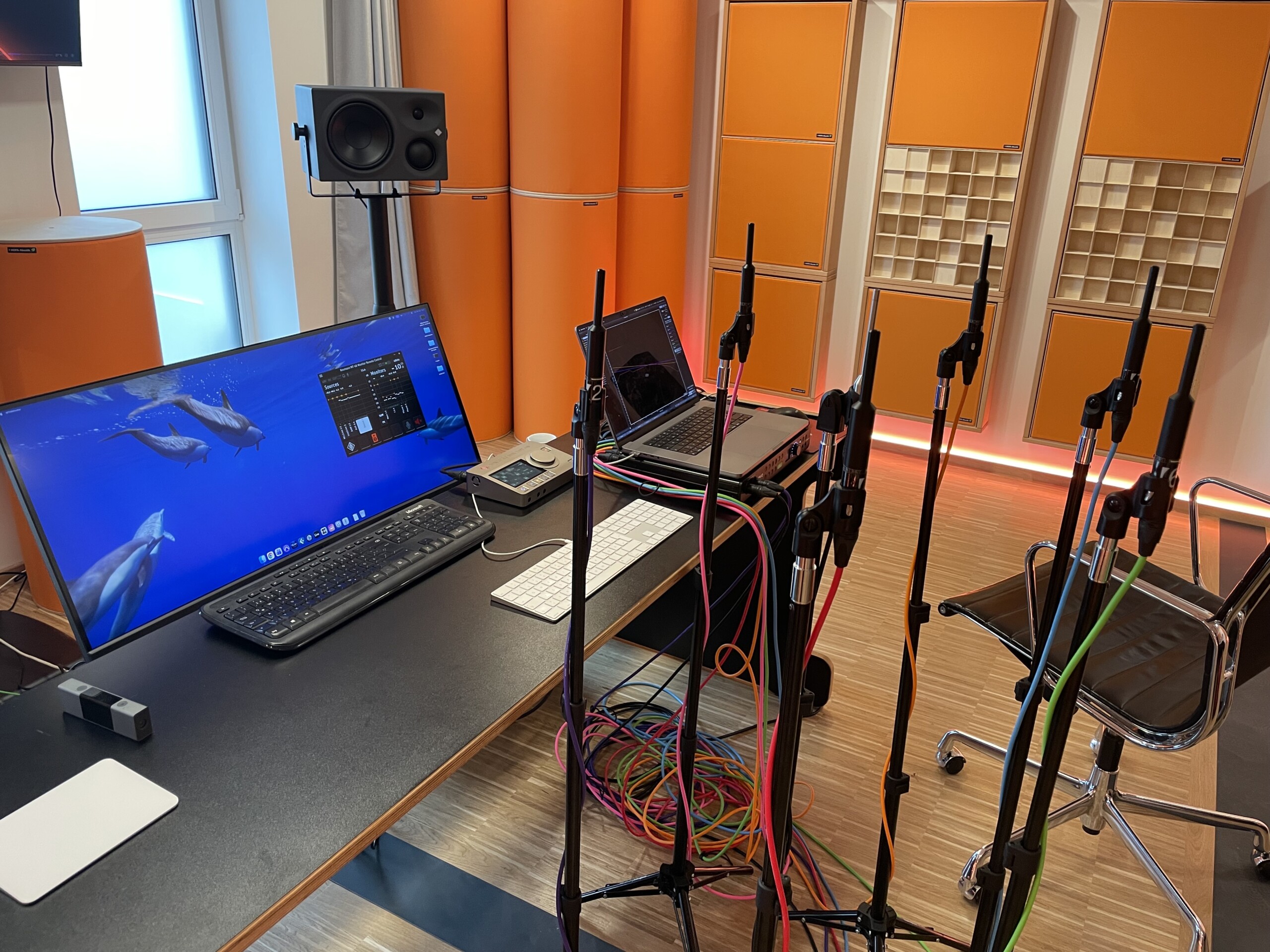
To optimise the control room precisely according to Dolby specifications, Roger Baltensperger from SMM is visiting us today.
With immersive formats such as Dolby Atmos, it is crucial that all signals reach the listener simultaneously. Due to the different distances between the various speakers and the listening position, the initial setup does not meet this requirement – hence the need for precise delay compensation. Prior to this, the speakers had been positioned, fine-tuned, and calibrated to the reference level.
[May 2026] Installation of the acoustic modules
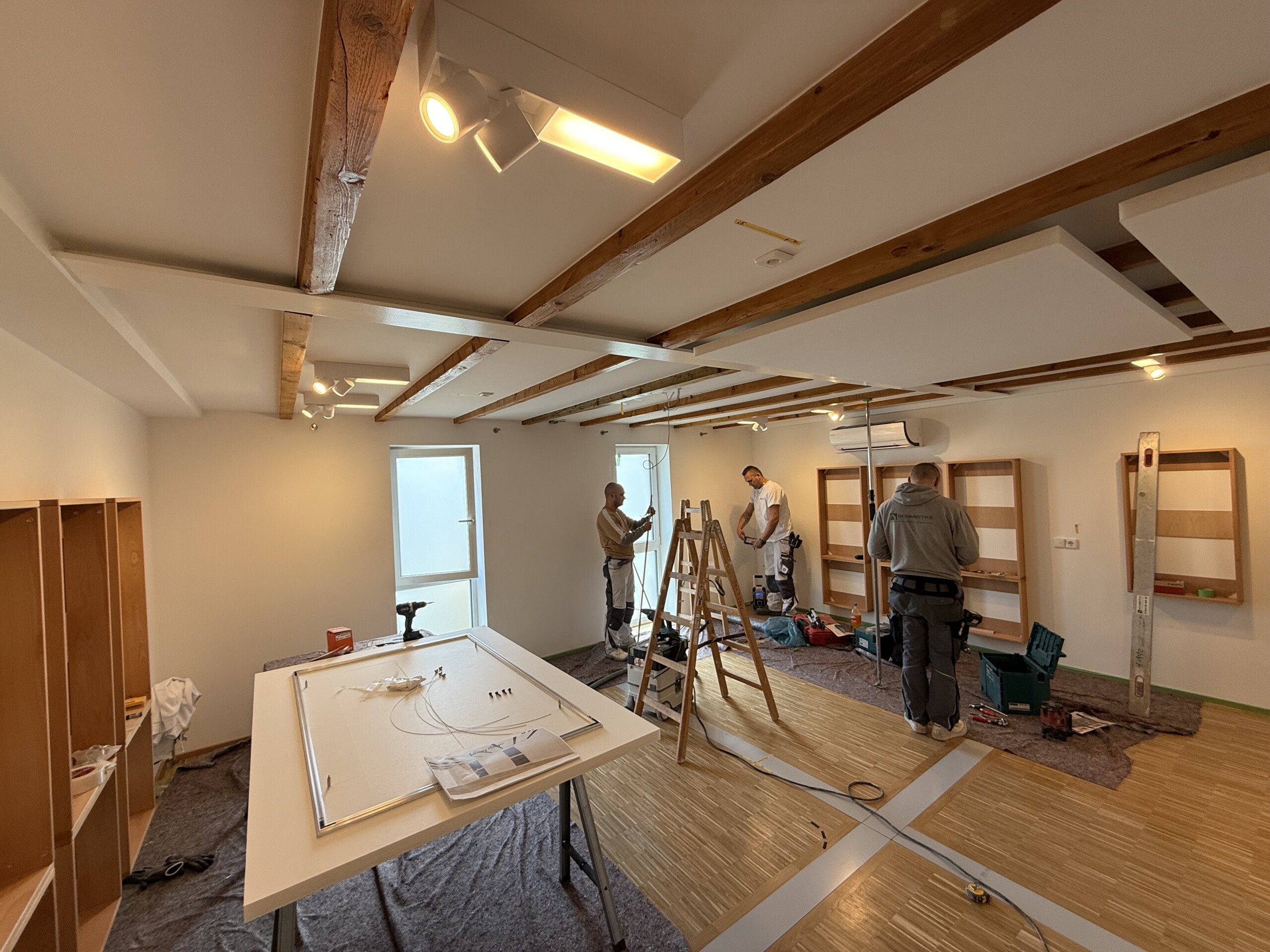
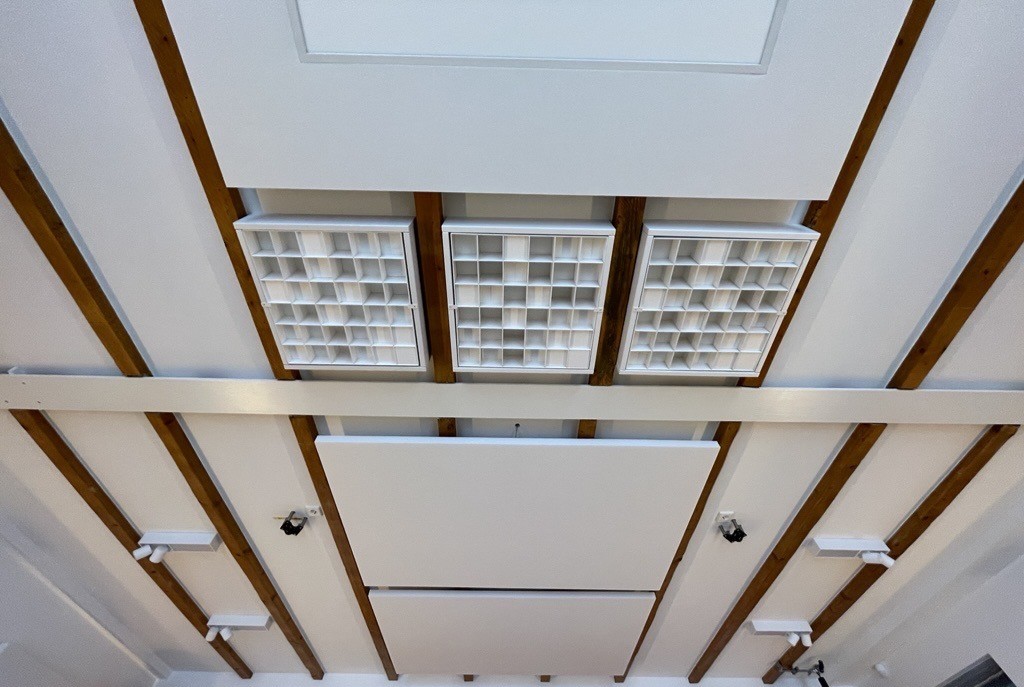
Today we installed all the acoustic modules in the room – including absorbers, diffusors, bass traps and acoustic curtains from HOFA-Akustik. The results are impressive! Before the acoustic modifications, the measured reverberation time was 2.1 seconds. Now that the room is fully equipped, it is down to just 0.35 seconds, which is in line with the figures we had calculated during the planning phase.
[May 2026] Final stages of interior work
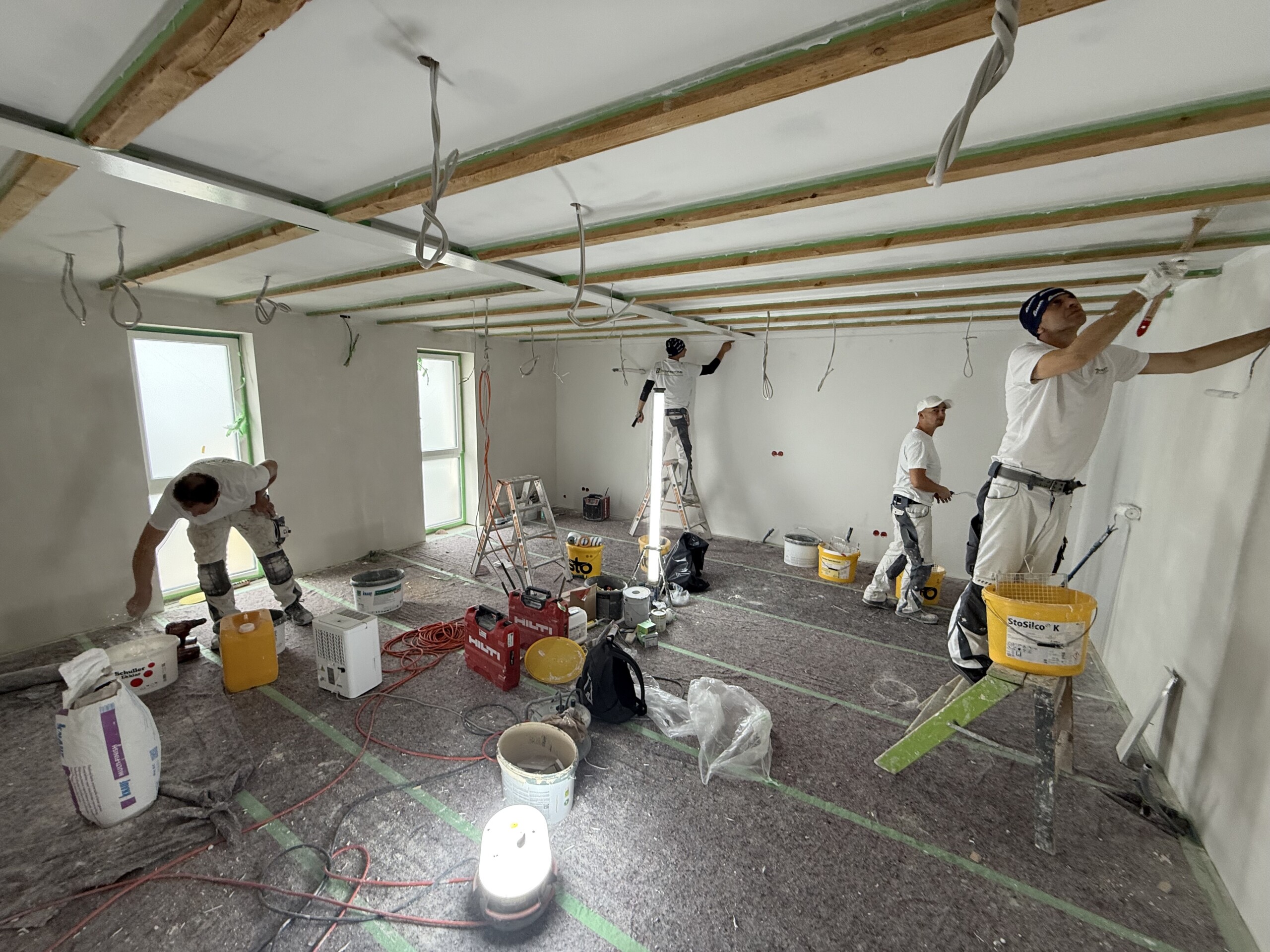
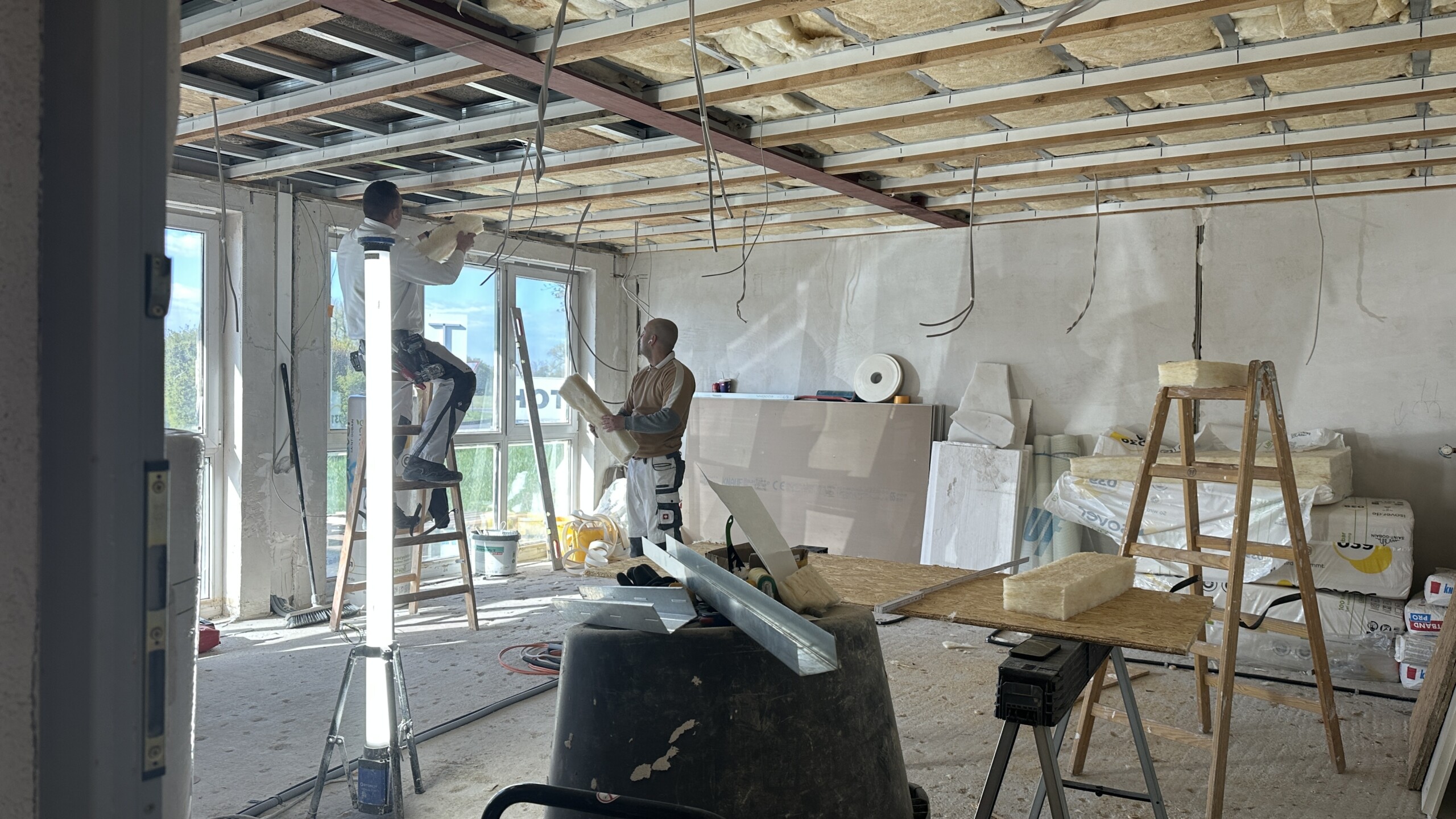
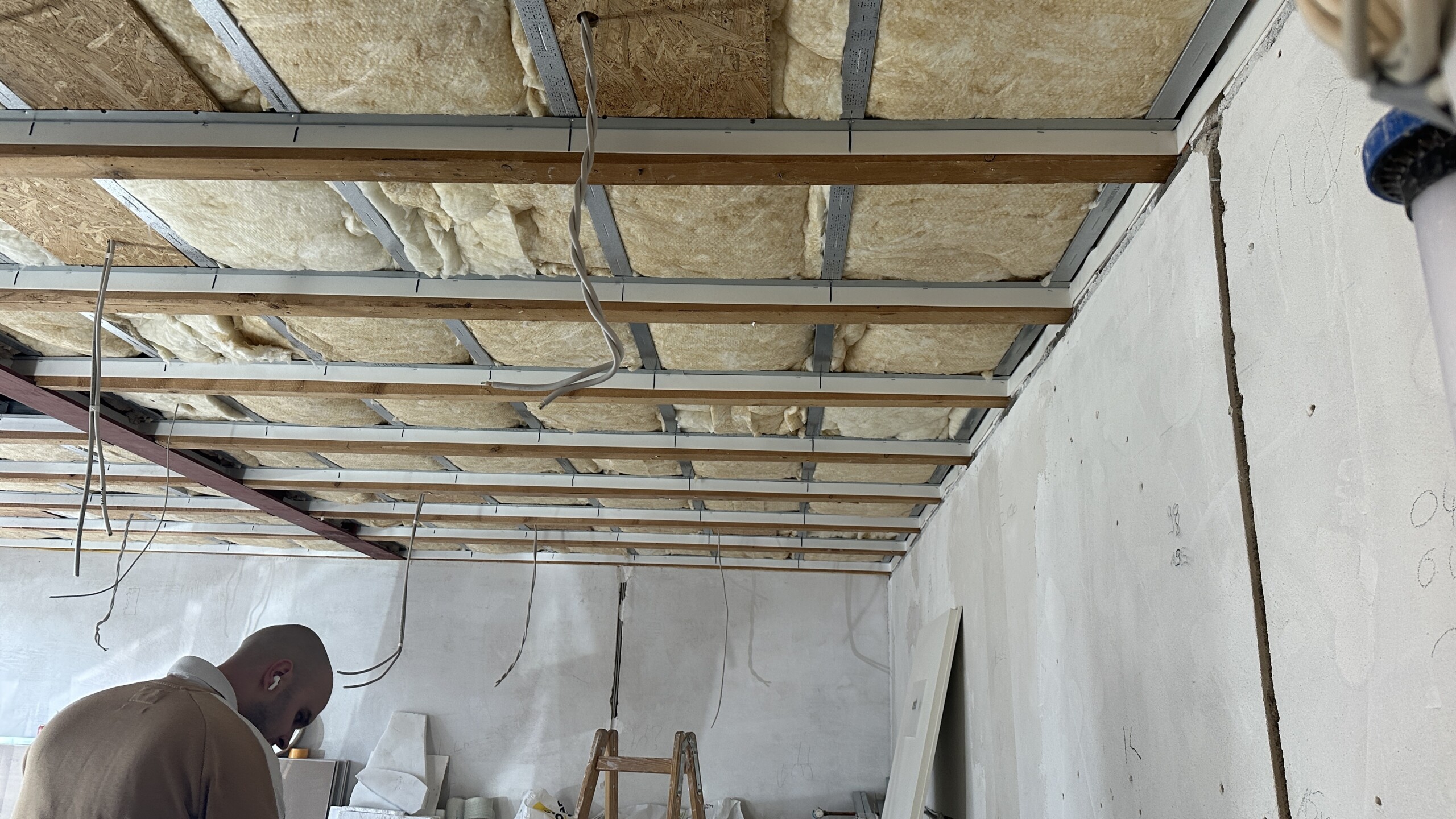
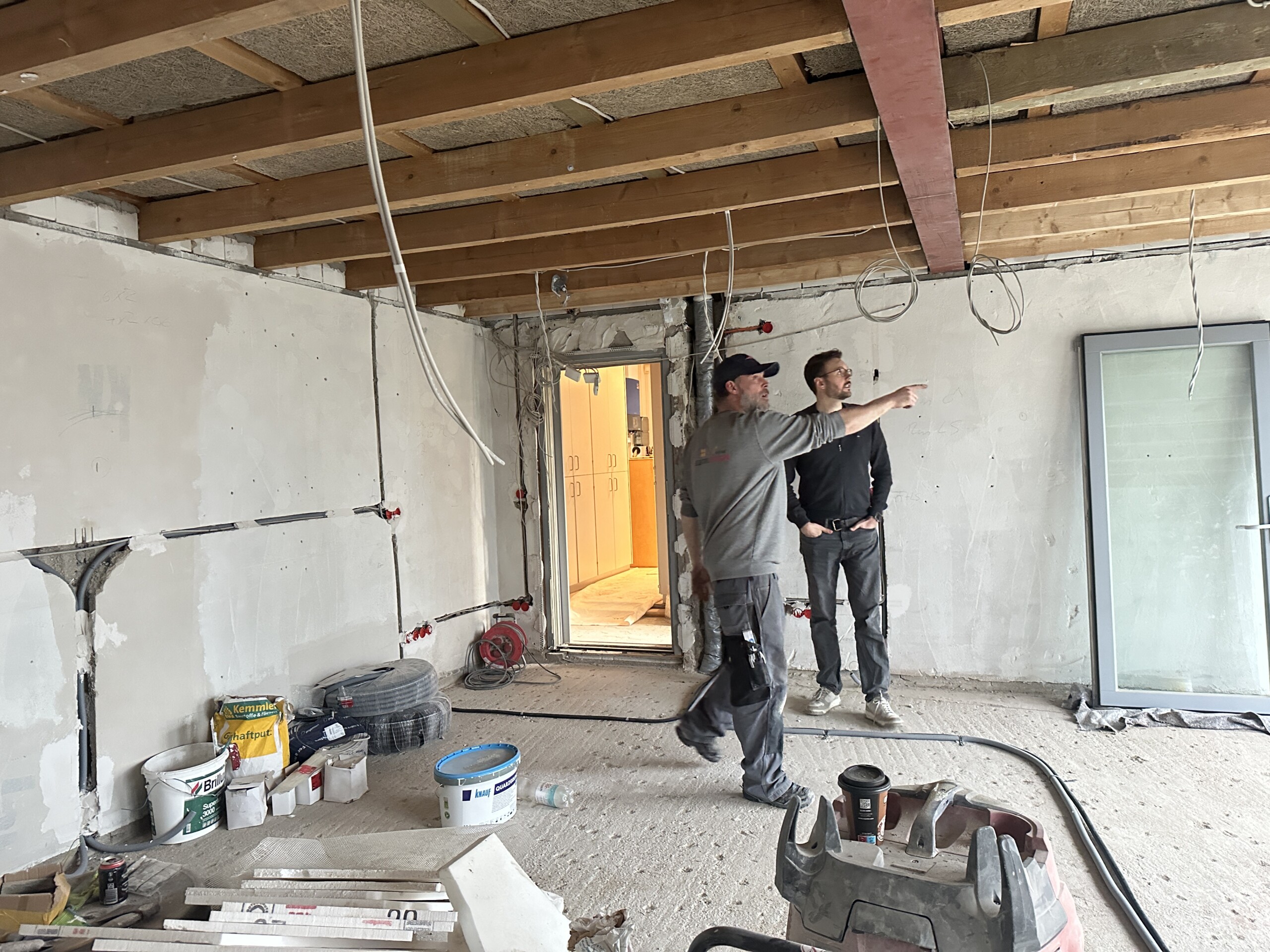
Over the past few days, the interior work has been largely completed. This included plastering and painting the walls, as well as installing electrical outlets and lighting. Initial acoustic measures have also already been implemented, including the installation of frames, ceiling panels, and diffusors.
[April 2026] Floor construction and cable ducts
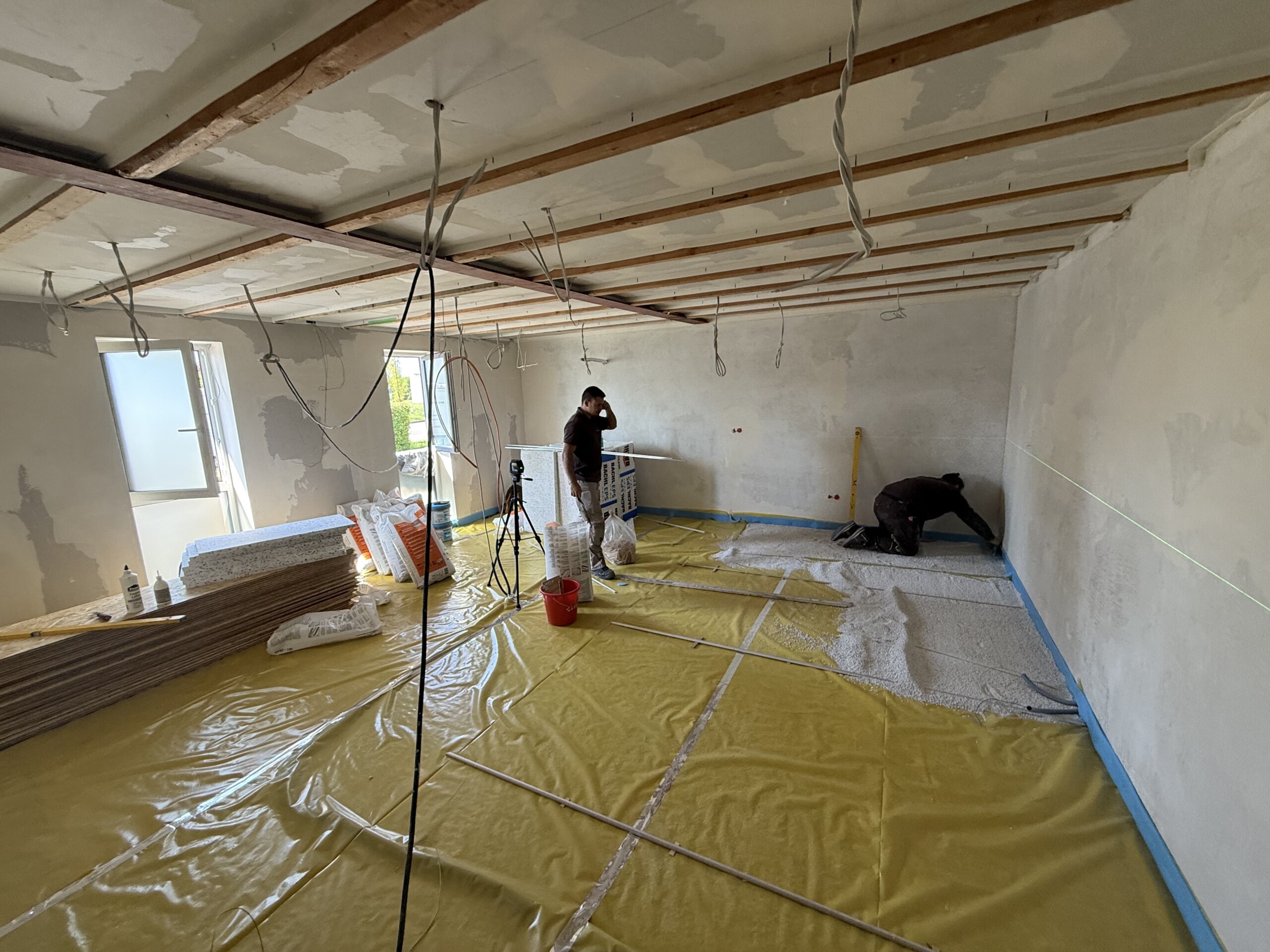
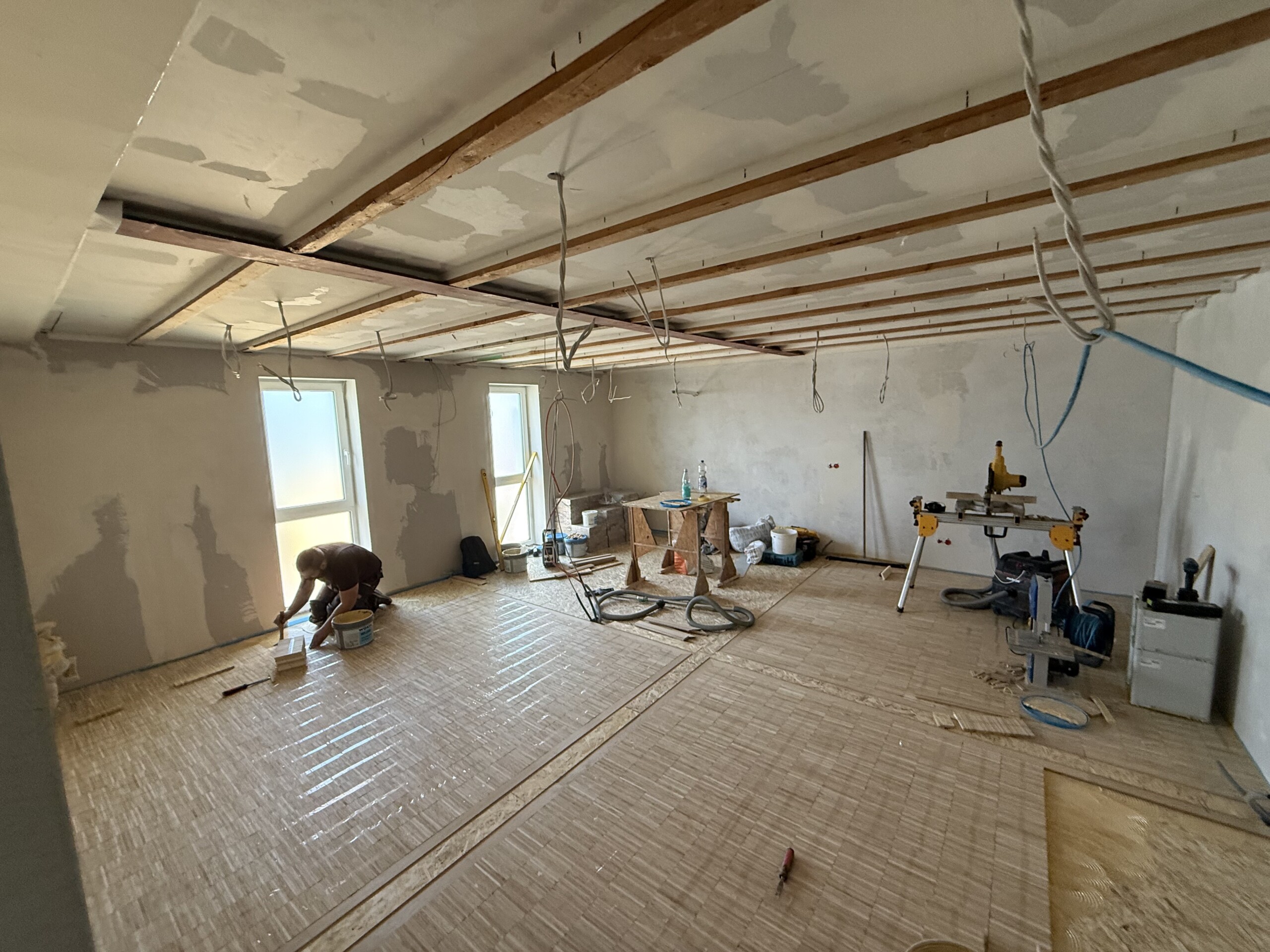
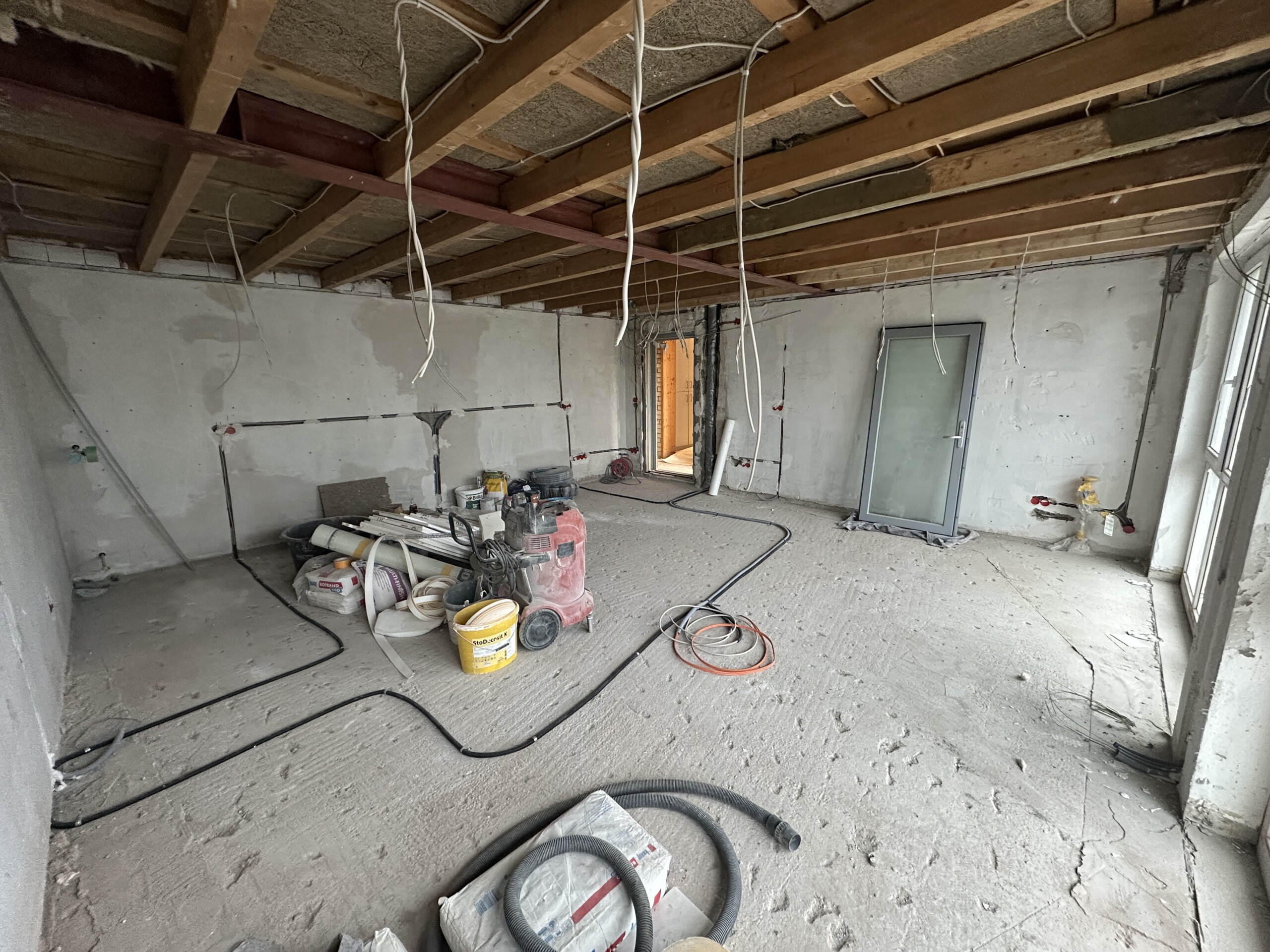
The next step is to lay the floors and install the cable ducts. As in all HOFA-Studios facilities, we use engineered wood flooring, while the cable ducts are arranged in a cross pattern throughout the room. This layout has proven effective in our studios for maximizing flexibility and ensuring clean cable management – especially with regard to future renovations and technical upgrades to the room.
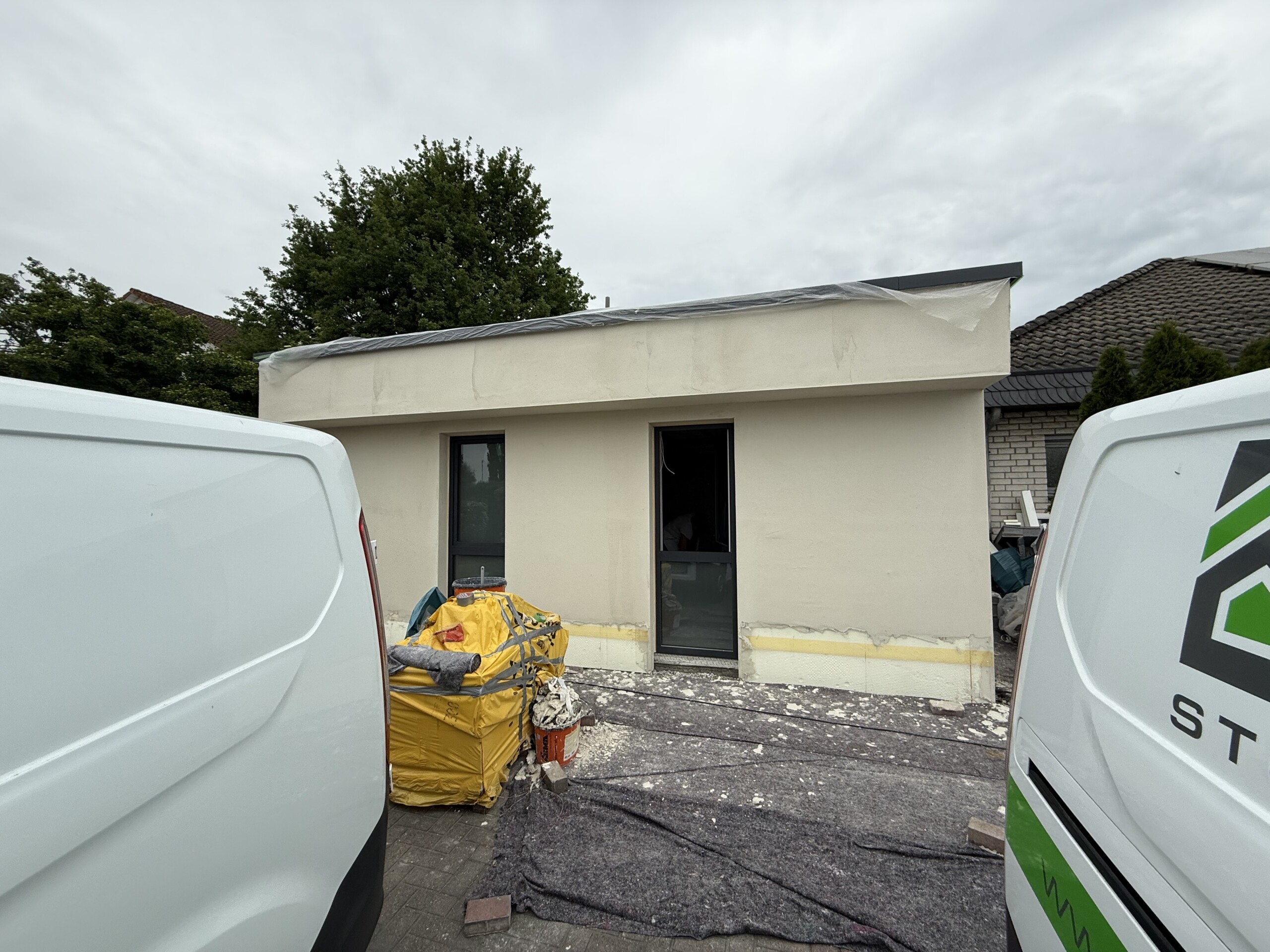
[April 2026] Dismantling of the windows and sealing of the façade
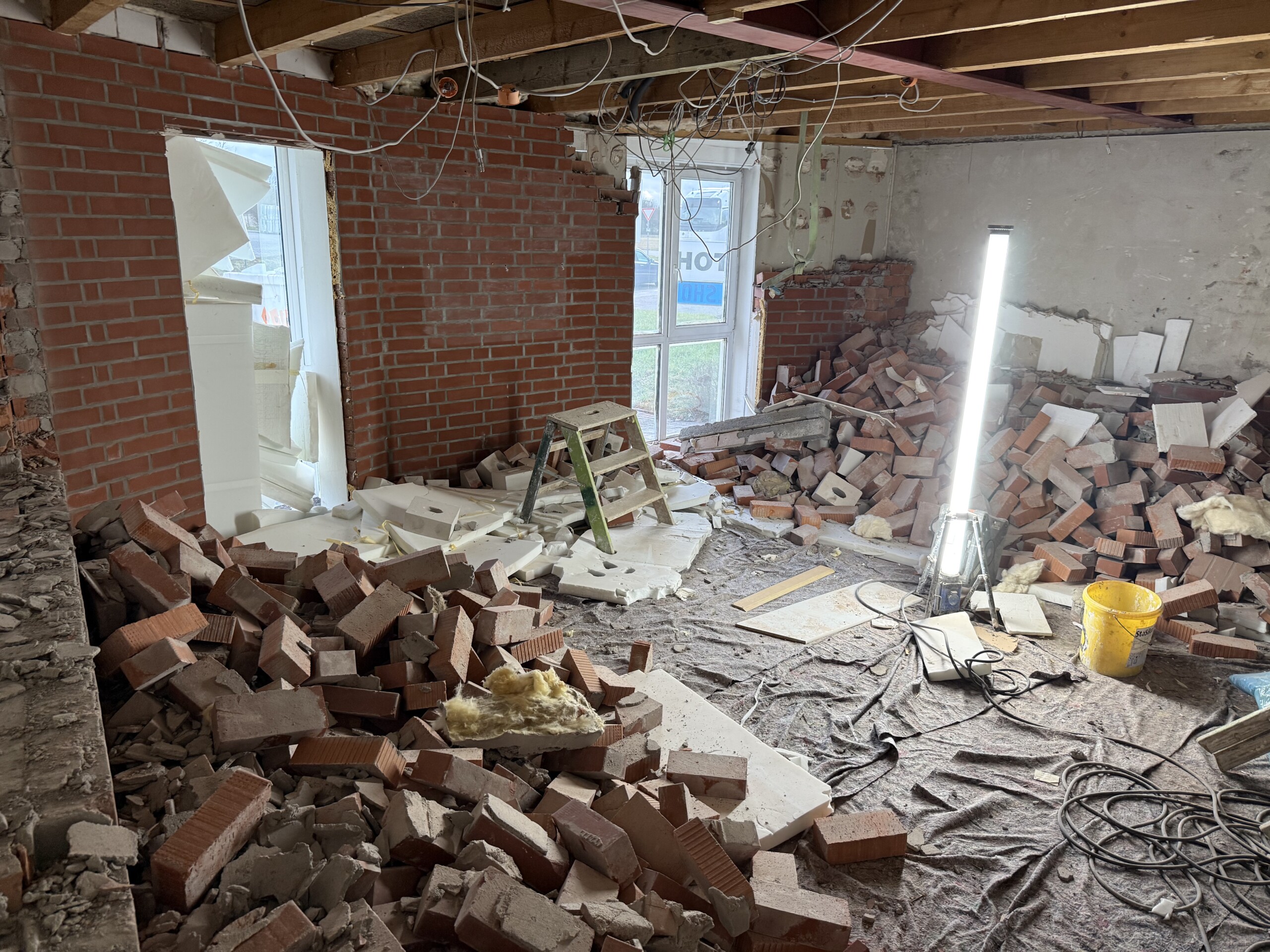
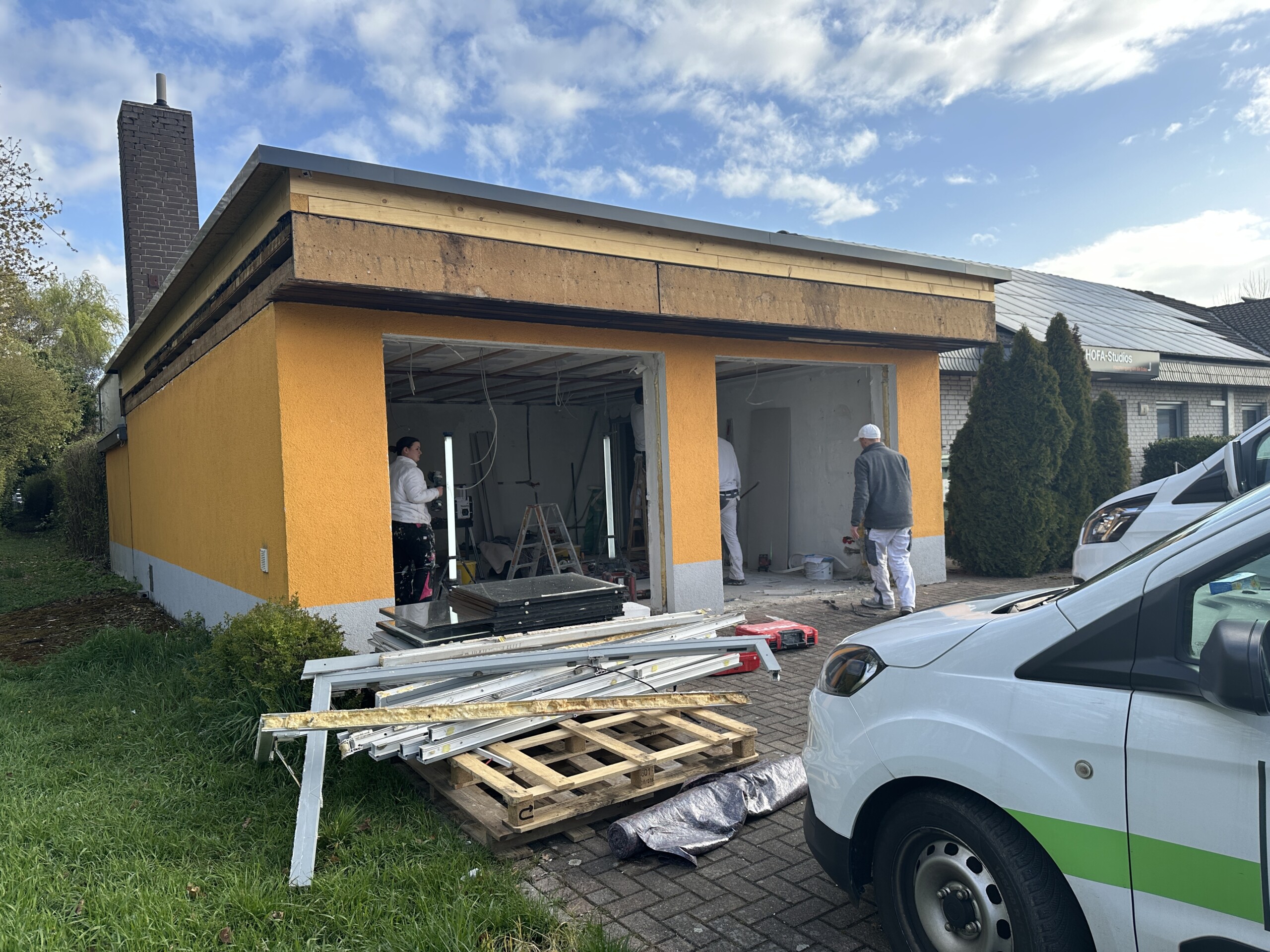
The room-within-a-room design of the old mastering room meant that the glass facade facing the street had not been a problem in terms of either acoustics or energy efficiency. However, as part of the renovation, the decision was made to remove the glass facade and replace it with a solid wall featuring smaller windows. A particularly soundproof glass was selected for the windows to reduce outside noise.
[March 2026] Electrical wiring + delivery of the speakers
By now, the wiring routes are being planned and installed. This includes positioning the sockets, laying the first cables and preparing the technical infrastructure. Speakers and all other devices will have separate power circuits.
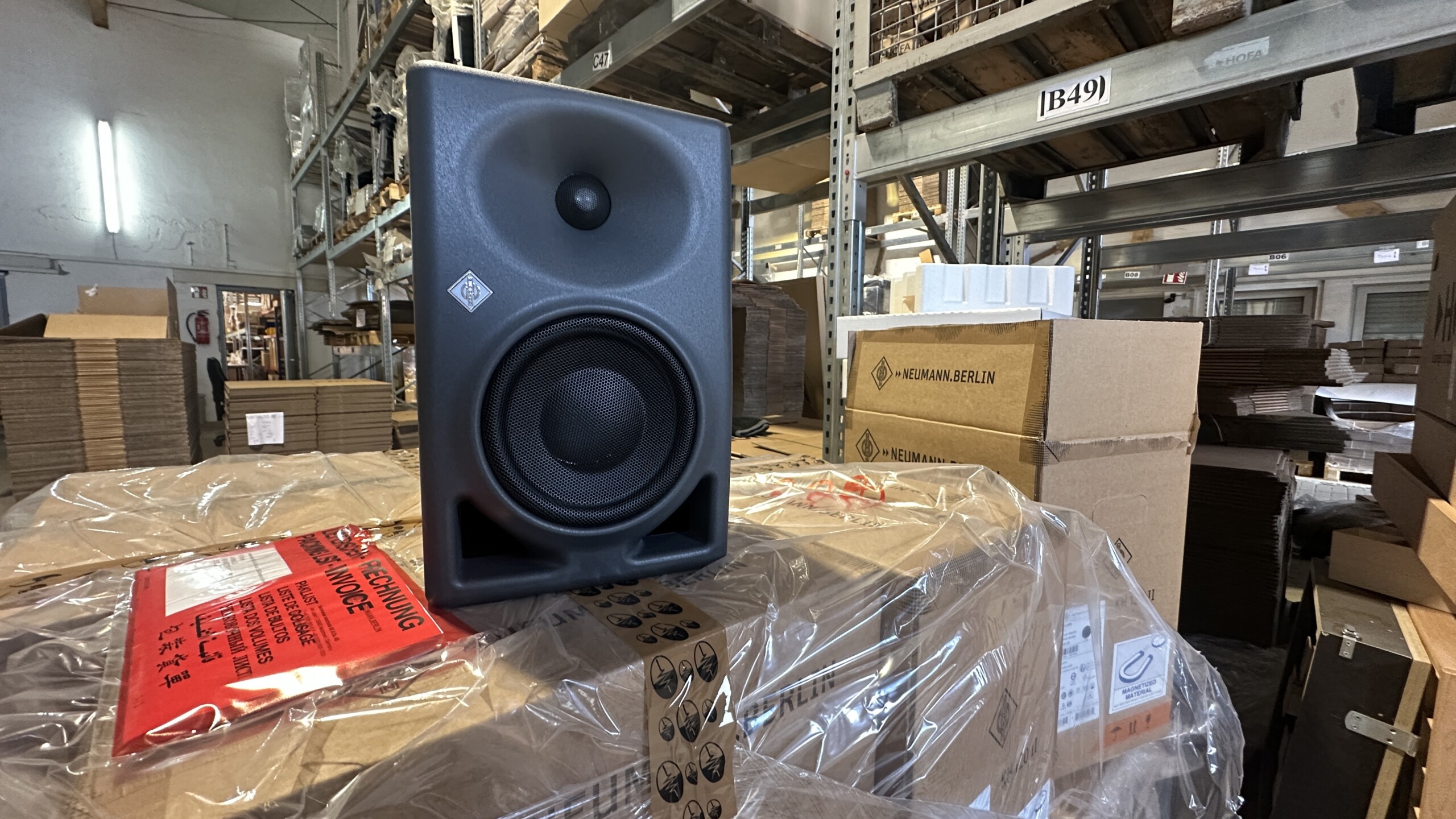
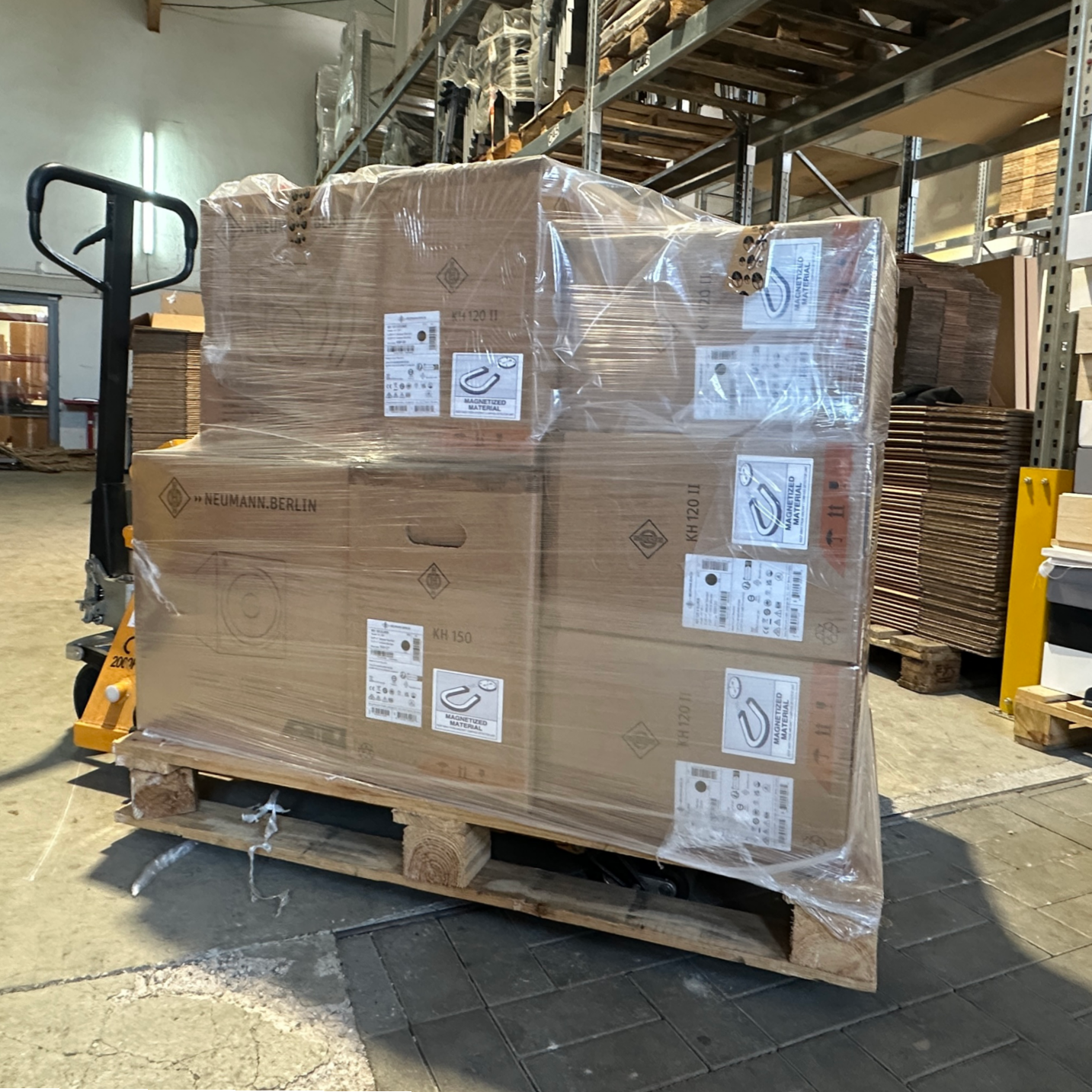
HOFA CEO Jan Bönisch inspects the construction work as part of the final handover. At the same time, the first delivery from Neumann arrives. The speakers will be stored in the HOFA warehouse for a few more weeks until they are installed.
[February 2026] Planning sessions with Neumann and Dolby
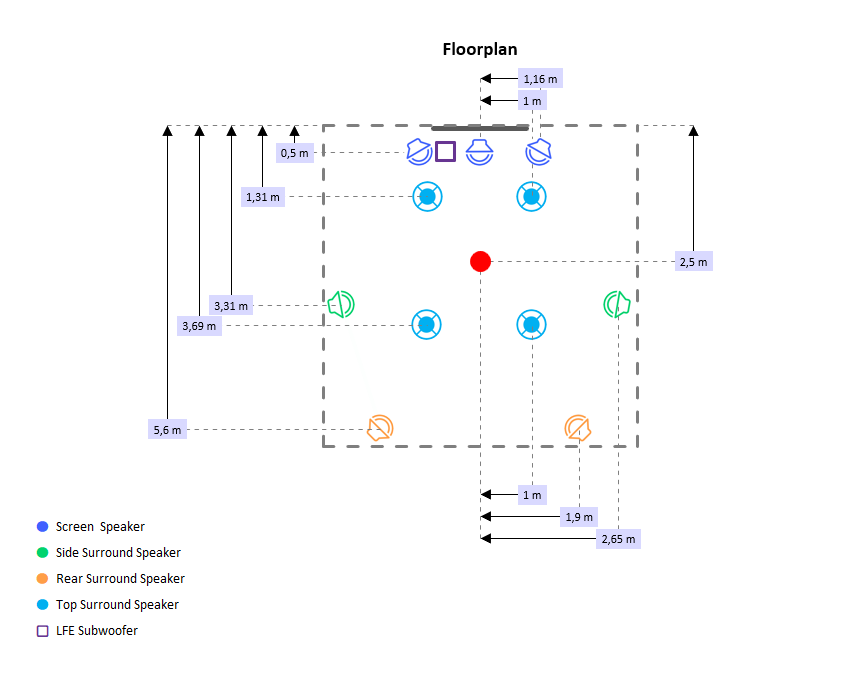
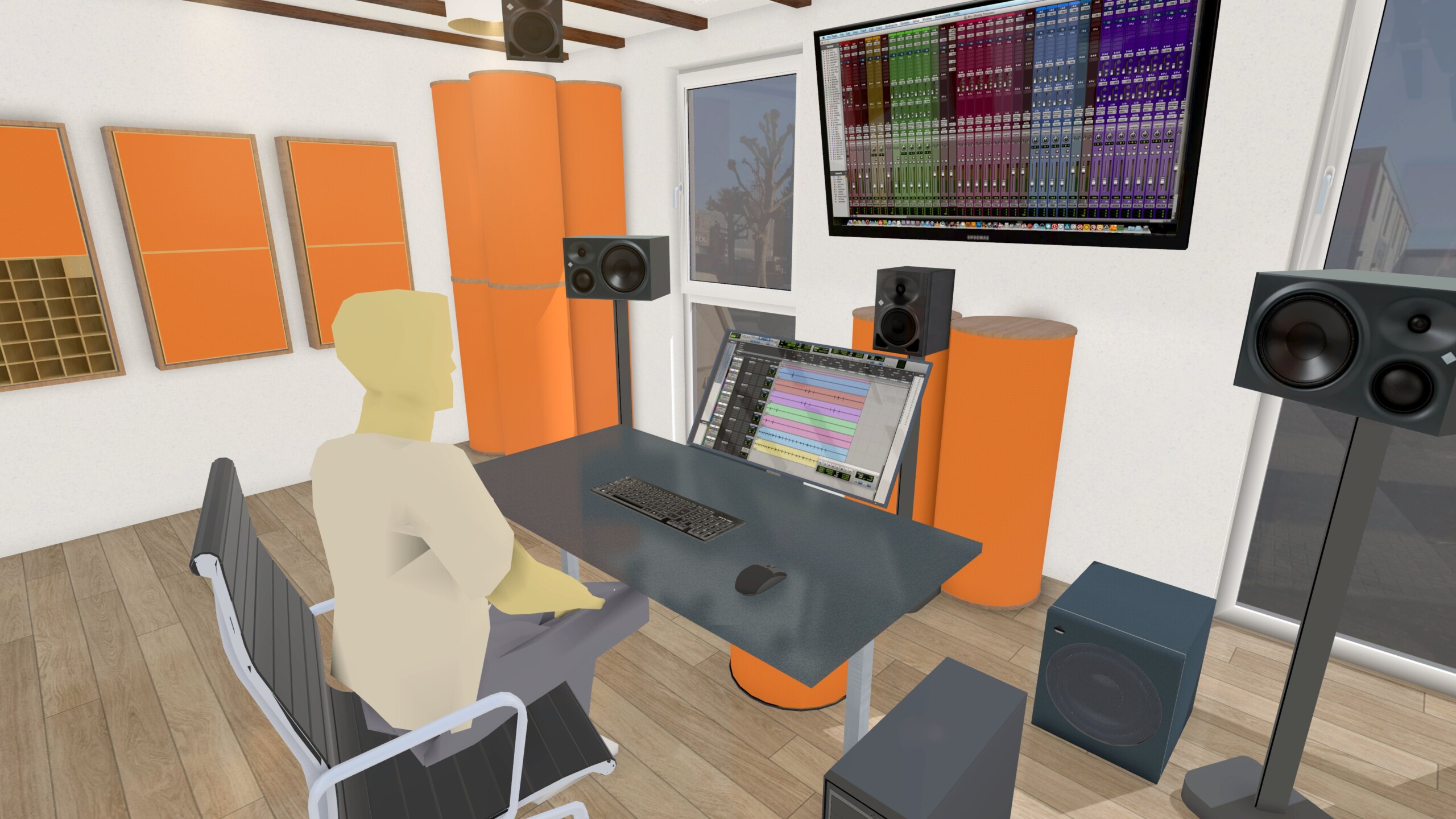
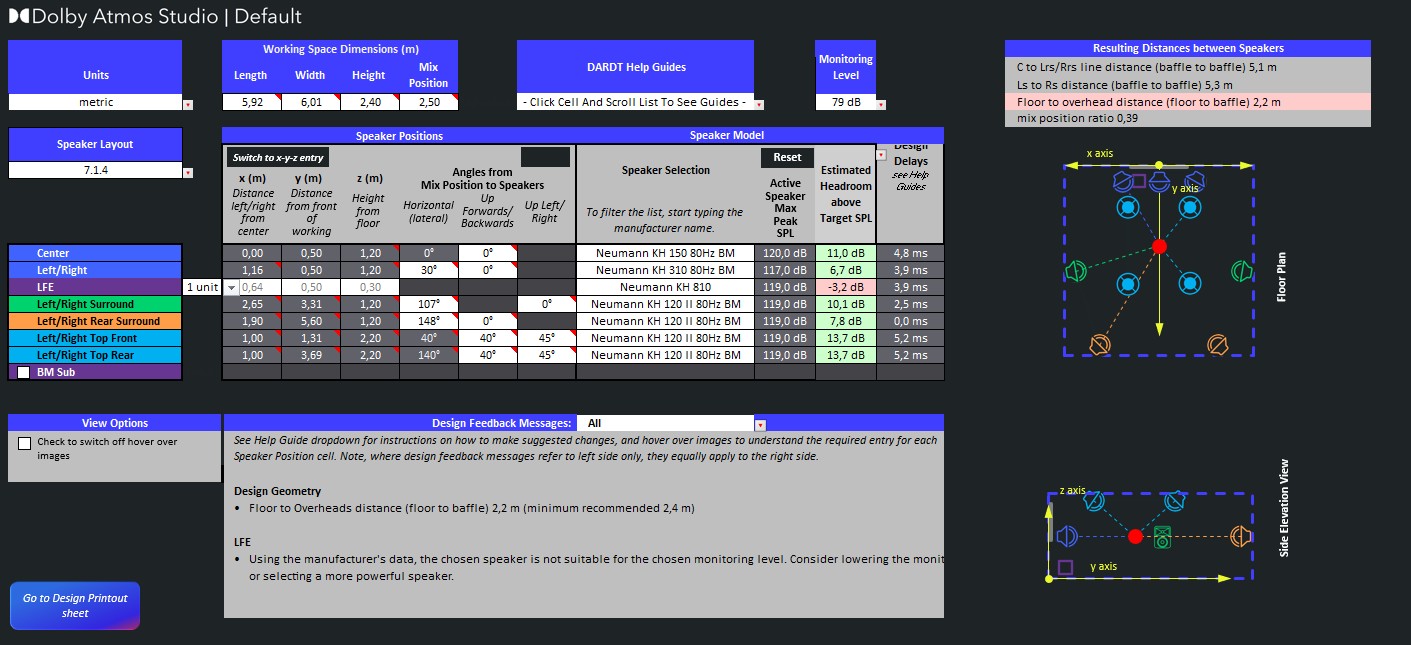
We teamed up with Neumann and Dolby for the planning and setup of the control room. Key account manager Andreas Pöppel and product specialist Holger Hausdorf from Neumann are helping us with the speaker setup. For the subwoofer, we opted for the KH 810. Our existing KH 310s are connected to this as the left and right main speakers, supplemented by a KH 150 as the centre speaker and eight KH 120 II for surround and overhead channels. As an audio interface and monitor controller, we chose the Neumann MT 48, which also features a Dante port.
And of course, all absorbers, bass traps and diffusers are supplied by HOFA-Akustik
David Ziegler from Dolby has provided us with ‘DARDT’, a reliable tool for speaker positioning. DARDT enables us to optimise the room in accordance with Dolby’s specifications. For training purposes at HOFA-College, we want to achieve as wide a sweet spot as possible, and this tool allows us to prepare this in an optimal manner.
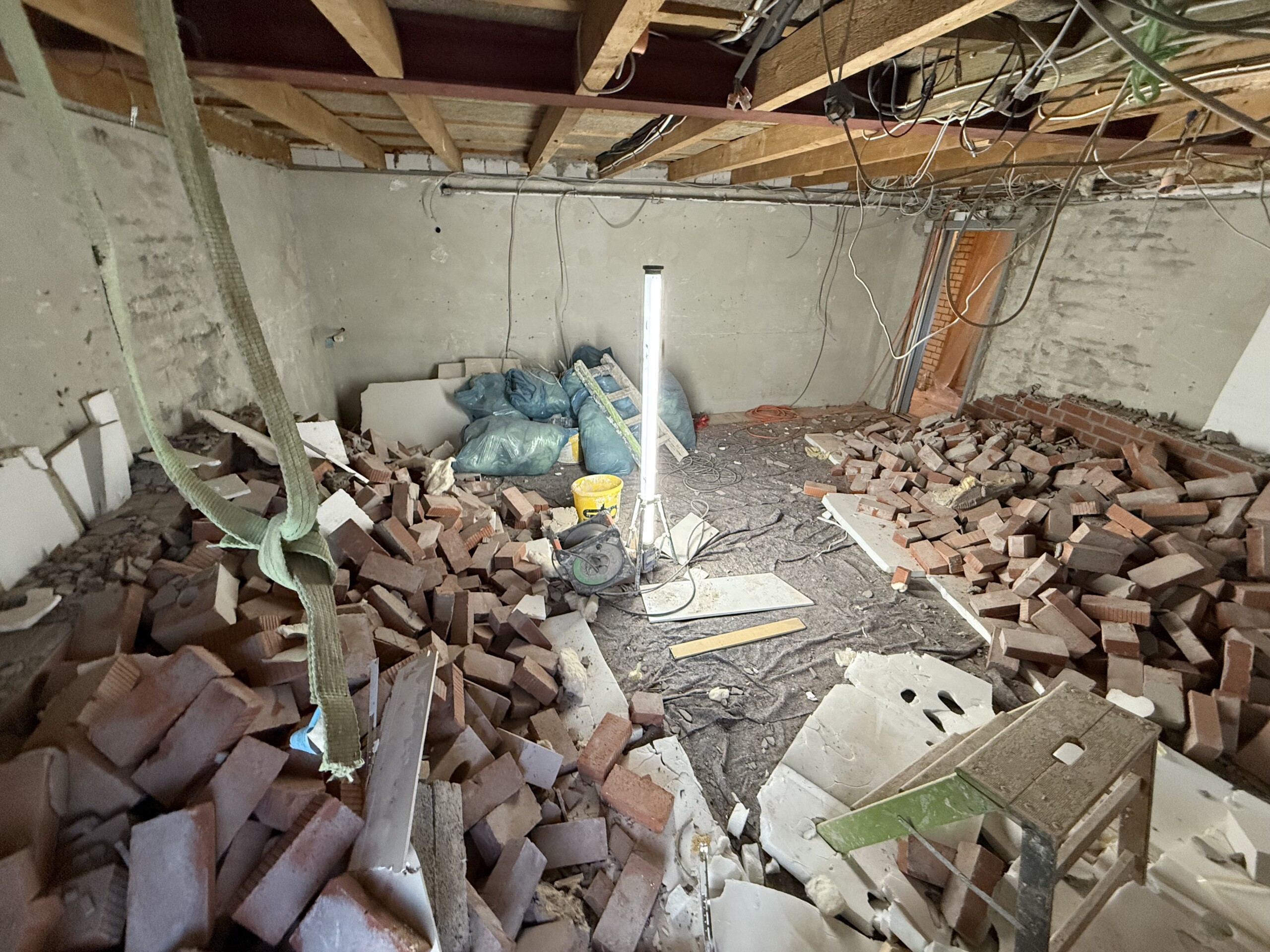
[January 2026] We’ve decided to renovate the old mastering studio.
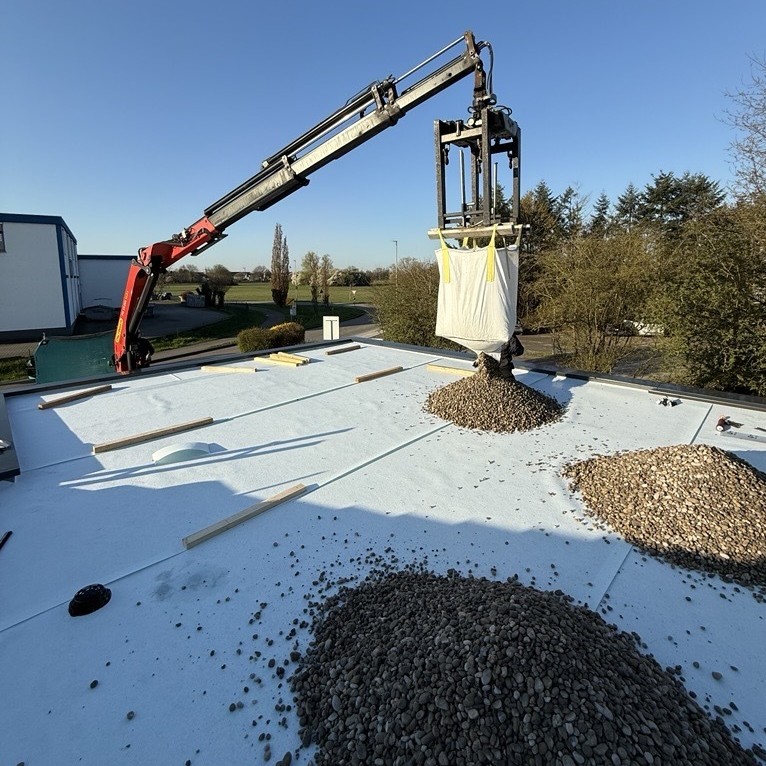
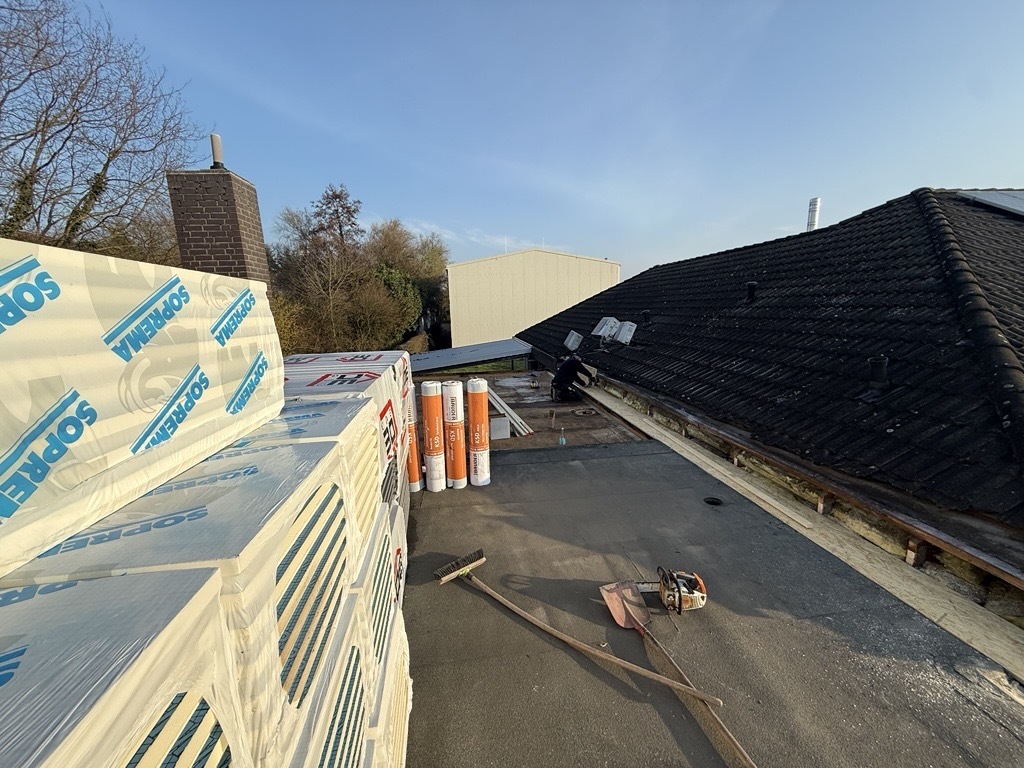
The decision to redesign the existing mastering room was made for several reasons. A leaking roof was one of the main factors, making renovation necessary anyway. As part of this project, energy-efficiency improvements will also be made to the roof, the windows and the exterior walls.
With this in mind, we came up with the idea not simply to renovate the existing control room, but to rethink it entirely. The new design features a multifunctional 3D Audio control room that can be used for a variety of purposes – including both typical Atmos applications as well as video production, workshops and stereo mixing. The room will also be used for the development of our new topic course “3D Audio”. Sound samples and hands-on content will be produced here and later be made available to our online course participants at HOFA-College.