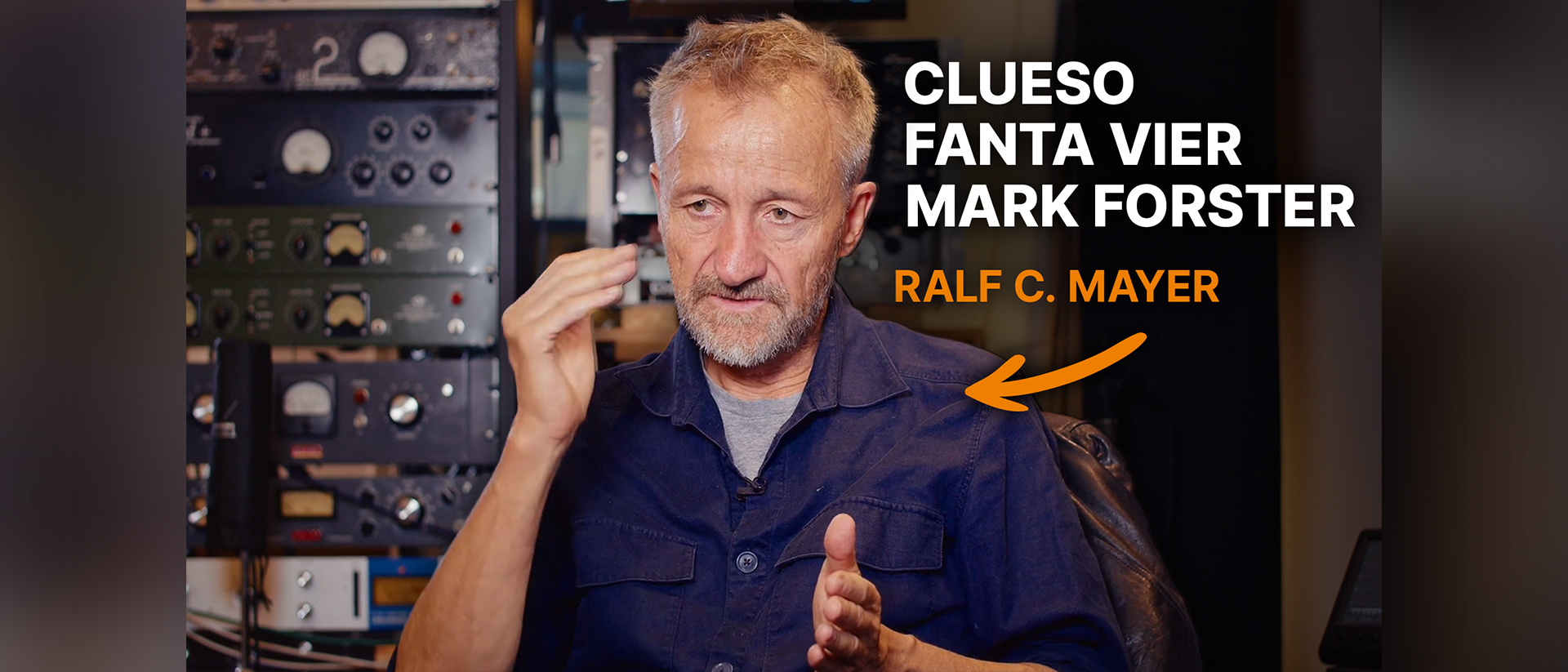
Ralf Christian Mayer is an acclaimed German music producer, songwriter, and sound engineer with decades of experience in the music industry. Known for his exceptional sound expertise, he has shaped numerous chart-topping hits and contributed to multiple gold- and platinum-certified productions.
1. Capture the Energy of a Performance
When recording a band, it’s not just about achieving the perfect sound – it’s about capturing a convincing musical performance. Especially when recording several musicians live, it’s important to preserve the energy and spontaneity of playing together.
However, recording more takes doesn’t necessarily lead to better results. Playing the same song too many times in a row can cause a performance to lose its freshness and expression. Often, the best recordings happen during the first few takes, when the musicians are still playing spontaneously and naturally.
An extended soundcheck can also have a negative impact on the actual recording. That’s why music producer Ralf Christian Mayer recommends playing only short sections while setting up the instruments and saving the full songs for the recording session.
The key is to recognize the right moment and avoid compromising a great performance with unnecessary repetitions.
2. Don’t Underestimate the Importance of Sound
A catchy melody is an important foundation for a successful song. But sound design also has a major influence on how a hook is perceived by the listener.
A distinctive sound can make a less memorable melody more interesting. On the other hand, the wrong sound can prevent even a strong musical idea from reaching its full potential.
This is particularly noticeable with instruments such as guitars and synthesizers. Factors like tone and sonic character play a major role in how a melody is perceived. With vocals, the artist’s unique and recognizable voice adds another important element.
That’s why it’s worth experimenting with different sounds early in the production process and treating melody and sound design as two closely connected elements.
3. Use Mixing Templates as a Starting Point, Not a Fixed Formula
Templates can significantly speed up your workflow in the DAW. Preconfigured tracks, buses, and routing provide a clear structure and allow you to focus on the creative aspects of music production.
However, extensive templates with predefined plug-in chains can also lead to different songs being processed in exactly the same way.
That’s why Ralf Christian Mayer mainly uses templates for organization. Instrument groups such as drums and bass are already arranged and routed, but he approaches the actual sound processing individually for each production.
For vocal recording, he now also uses a prepared setup with EQ, compression, delay, and reverb. This allows him to provide singers with a comfortable headphone mix right from the start of the recording session.
A good workflow should therefore simplify routine technical tasks while leaving enough creative freedom to make individual mixing decisions.
4. Put the Performance First When Recording Vocals
A great vocal recording doesn’t depend solely on the quality of the microphone or the plug-ins being used. It’s just as important that singers feel comfortable during the recording session and can fully concentrate on their performance.
Extensive microphone comparisons can quickly become a problem. Spending too much time on technical preparations may affect the artist’s concentration and motivation.
In many cases, it’s therefore better to rely on a small selection of tried-and-tested microphones and switch between them when necessary, rather than comparing numerous different models.
The headphone mix should also be tailored to the singer’s personal preferences. While some artists prefer to hear their voice as dry as possible, others feel more comfortable with a little reverb or delay. What matters most is that they feel comfortable while recording.
Specialized plug-ins can also be helpful when processing vocals afterwards. In the interview, Ralf Christian Mayer highlights the HOFA IQ-EQ and HOFA DeEsser, among others. He particularly appreciates the DeEsser’s flexible options for precisely controlling unwanted sibilance and problematic frequency ranges.
When recording vocals, technical decisions should always support the musical performance rather than unnecessarily distracting from the actual recording process.
5. Don’t Be Afraid of Imperfection
Modern music production offers almost unlimited possibilities for sound processing and technical optimization. But a perfectly clean and consistent production isn’t necessarily a lively or exciting one.
Small imperfections, unusual sounds, and spontaneous musical decisions can give a song a unique character.
For Ralf Christian Mayer, the willingness to experiment is therefore one of the most important ingredients of interesting music productions. Instead of relying exclusively on established sounds and production techniques, producers should develop their own ideas and embrace what might initially seem like mistakes.
This also means trusting your own musical instincts. It’s completely normal to occasionally doubt a song or a creative decision. If an idea that previously sounded great suddenly doesn’t feel right anymore, taking a break and returning to it later with fresh ears can help.
“Everything is very polished, clean, and consistent.
And I think what we need now more than anything is a little more life.”
Ultimately, developing your own signature sound isn’t just about perfect technique. It’s about creativity, experimentation, and having the courage to follow your own path.
You want to learn all about audio engineering and music production?
The AUDIO DIPLOMA online course from HOFA-College will give you the complete knowledge and practical experience for excellent sound.