
Sidechaining between the kick and bass is a standard technique in many genres of music when it is about keeping the low end transparent and uncluttered. Applied correctly, it ensures that the kick and bass aren’t competing for the same frequency space, giving the whole beat noticeably more punch. Below we show you four methods — from the classic compressor approach to a graphically editable LFO variant.
1. Sidechain compression with a filtered trigger signal
The most obvious approach is a compressor’s sidechain function: the kick signal serves as the external input source for a compressor inserted in the mixer channel of the bass. With every beat of the kick drum, the compressor briefly pushes the bass “out of the way”, creating space in the lower frequency range.
The problem: depending on the kick’s sustain and low-end energy, even carefully adjusted compressor timing settings don’t always deliver a satisfying result. The solution is a small workaround: route the kick additionally to its own effects bus with no direct output. On this bus, a highpass filter is applied via EQ, letting through specifically the upper, transient-rich portions of the kick. This filtered signal — rather than the full kick — then serves as the sidechain source for the bass compressor. The result is much more precise control over the ducking, since the compressor reacts only to the percussive “attack” of the kick rather than its entire low-end foundation.
2. Dynamic EQ on the target frequency
The second method is a somewhat more subtle variant of sidechaining and works well for genres with energetic drums, for example modern metal with a “real” bass — but it translates just as well to other genres. Instead of compressing the full frequency range, this approach is more targeted:
First, an analyzer is used to identify the frequency range where the kick has the most energy. On the bass channel, a dynamic EQ is then applied, with a bell filter set precisely to that frequency. The kick is again selected as the trigger for this dynamic band, and the threshold is adjusted so that the reduction on the bass only kicks in when the kick actually has energy in that range.
The advantage over full range compression: only the frequency range where the kick and bass actually overlap is reduced. The rest of the bass signal remains untouched — the result is a punchy kick alongside a transparent, well-defined low end.
3. Ducking with editable timing parameters
For electronic productions with massive synth bass sounds, a dedicated ducker is a good fit — for example, the ducker in HOFA SYSTEM. Here too, the kick serves as the sidechain input source, but with much finer control over the effect’s timing.
Several parameters let you define exactly:
- how quickly the ducker engages after the kick trigger,
- how long the reduction lasts,
- how slowly the signal returns to its normal level,
- and how strongly the bass is reduced overall.
This method allows for precise control over the sidechaining, since the effect curve can be displayed and edited graphically — similar to editing a filter. This lets you shape the “duck curve” in detail to fit the track, rather than relying on the fixed characteristics of a compressor.
4. Precise sidechaining via LFO tool and MIDI routing
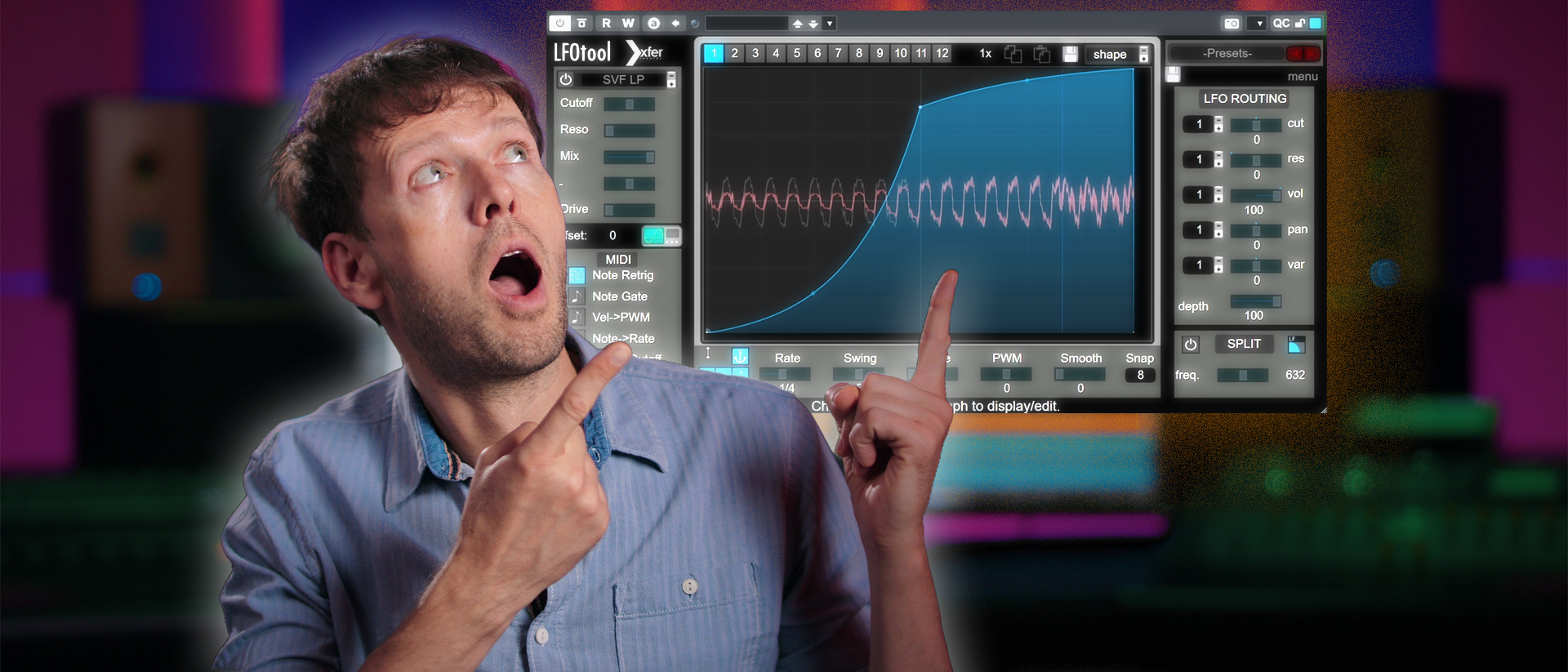
The fourth technique goes one step further regarding visual control: an LFO tool is placed on the bass track’s insert. On a newly created MIDI track, the MIDI part from the kick track is copied, and its output is routed to this LFO tool on the bass channel.
This turns every kick note into a trigger for the LFO curve, which in turn shapes the bass. The big advantage: the sidechain signal can be shaped in great detail this way, rather than relying on the fixed characteristics of a classic compressor or ducker.
Conclusion
Whether it’s a subtle compressor, a dynamic EQ, a precise ducker, or an LFO-driven setup – there’s a suitable sidechaining technique for every production situation. Once you understand when to use which method, you can shape the interplay between kick and bass with intention, giving your beat noticeably more punch and clarity in the low end.
You want to learn all about audio engineering and music production?
The AUDIO DIPLOMA online course from HOFA-College will give you the complete knowledge and practical experience for excellent sound.

